In 1853, Henry David Thoreau (1817-1862) wrote, “Why should not we…have our national preserves… in which the bear and panther, and some even of the hunter race, may still exist, and not be ‘civilized off the face of the earth’–our forests…not for idle sport or food, but for inspiration and our own true recreation.” 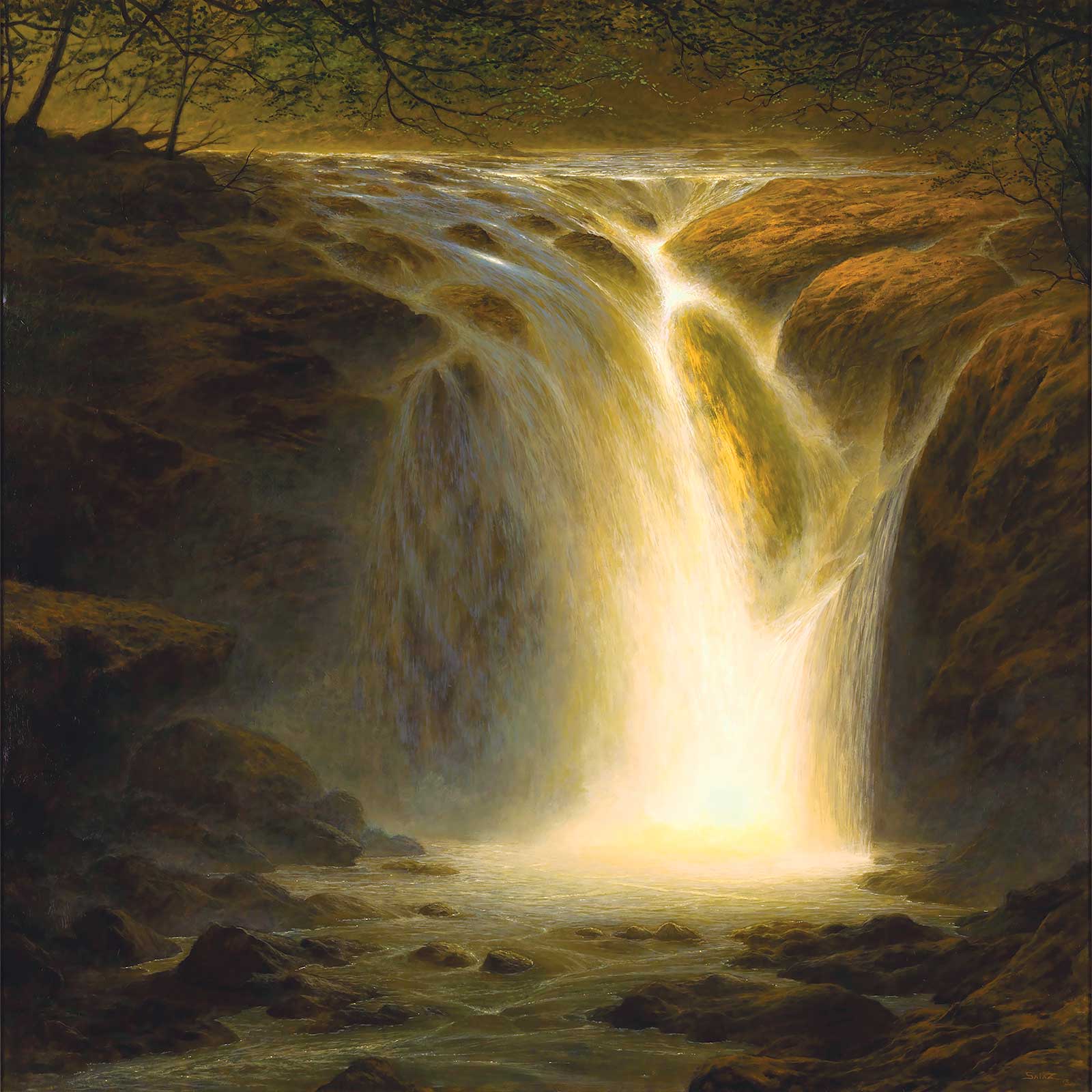 Tree’s Place Gallery, Grace, oil on canvas, 36 x 36", by Ken Salaz.
Thoreau’s ideas about preserving the wild influenced conservationists who followed him and eventually resulted in the establishment of national parks and preserved wilderness, vast stretches of uncultivated land left in its natural state. In 1856, he discovered a small spot of land that seemed to be untouched and realized that wildness could be right at hand. He wrote, “I shall never find in the wilds of Labrador any greater wildness than in some recess in Concord.”
Bill Bryson, in his book, A Walk in the Woods, addresses the contemporary dilemma of wilderness versus cultivation. “In America, alas, beauty has become something you drive to, and nature an either/or proposition—either you ruthlessly subjugate it, as at Tocks Dam and a million other places, or you deify it, treat it as something holy and remote, a thing apart, as along the Appalachian Trail.”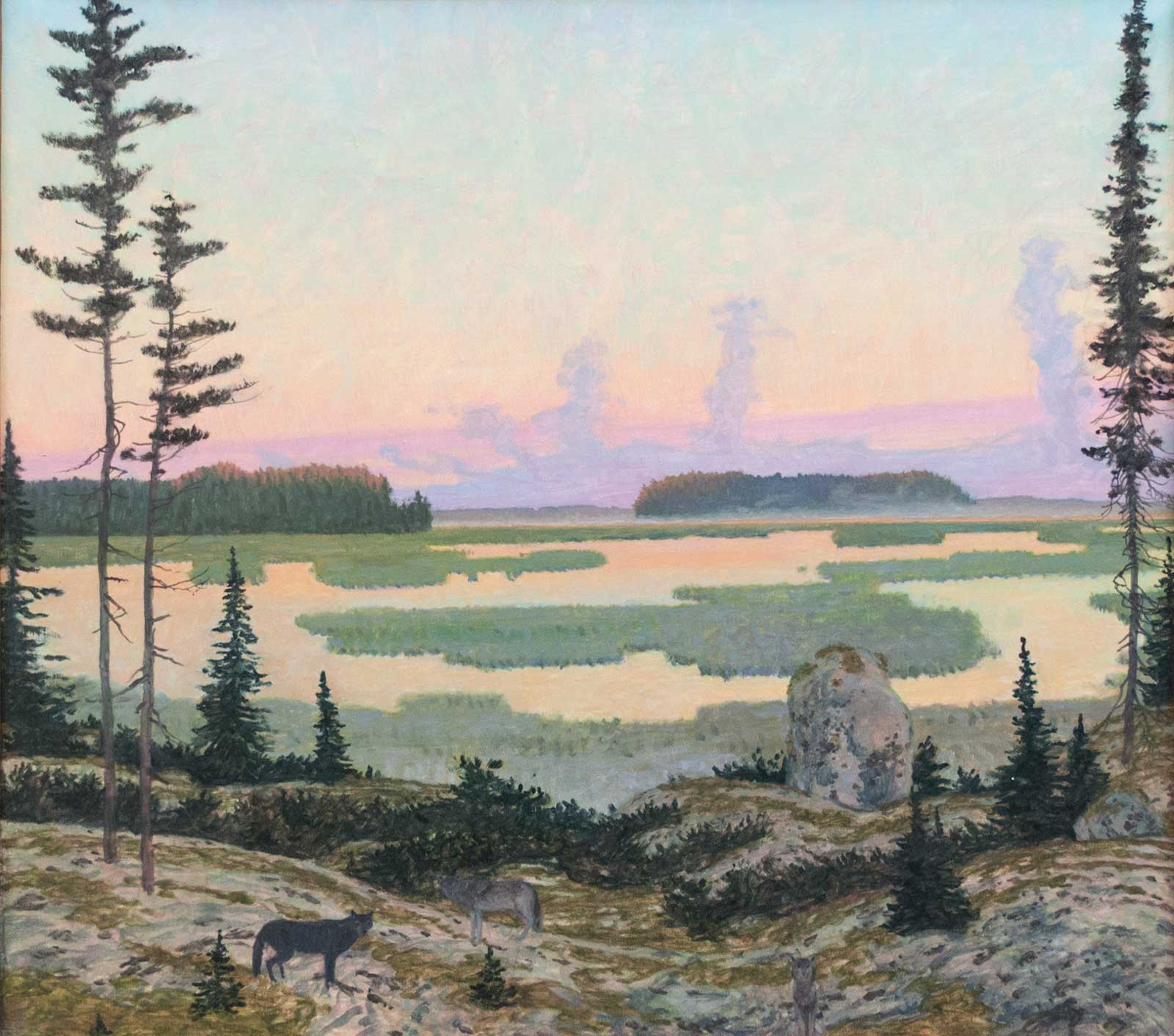 Tory Folliard Gallery, Gakiiwe (822), oil on linen, 26¾ x 29", by Tom Uttech
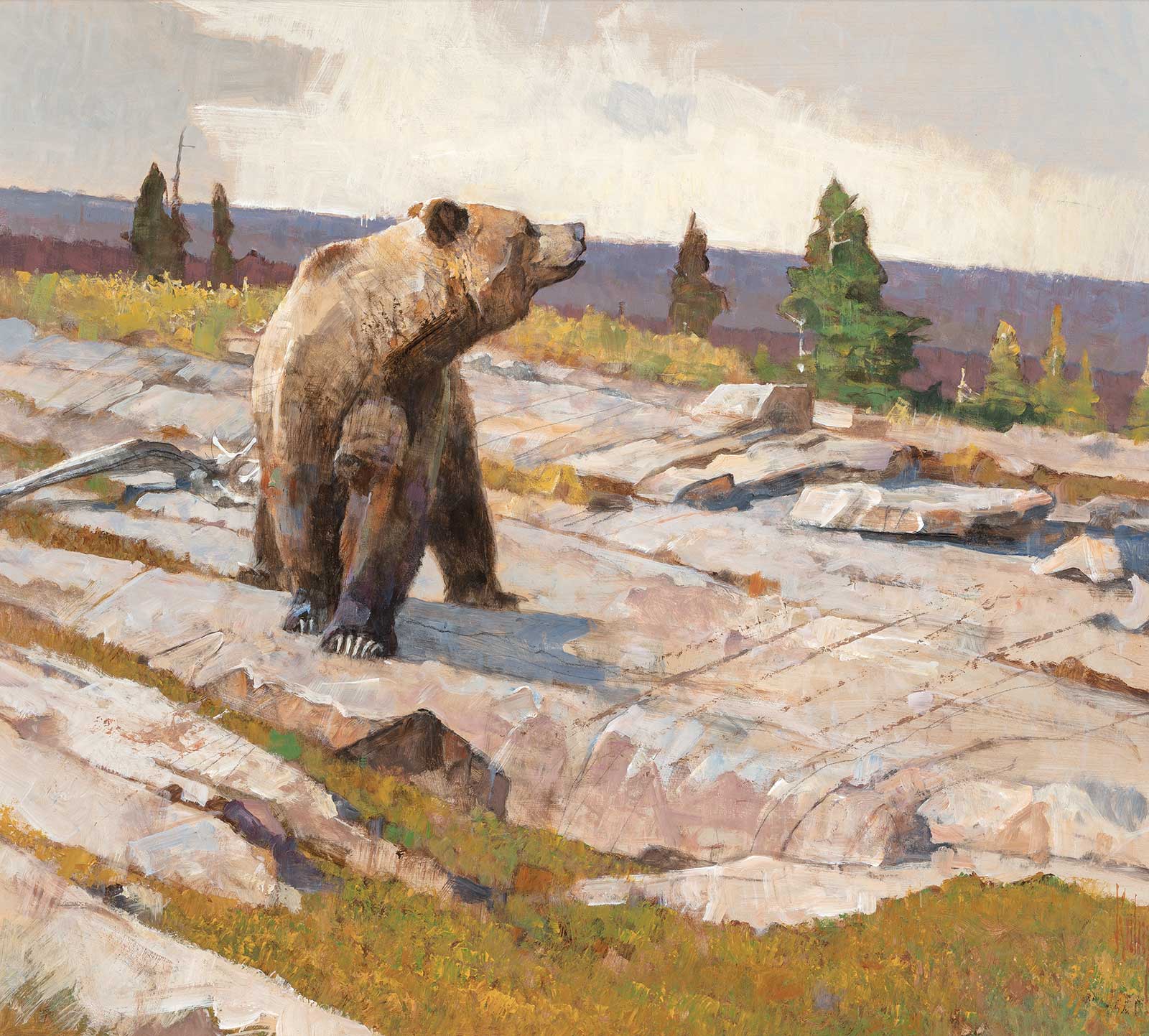 Great American West Gallery, North Country, 1991, acrylic on board, 21½ x 24", by Bob Kuhn (1920-2007).
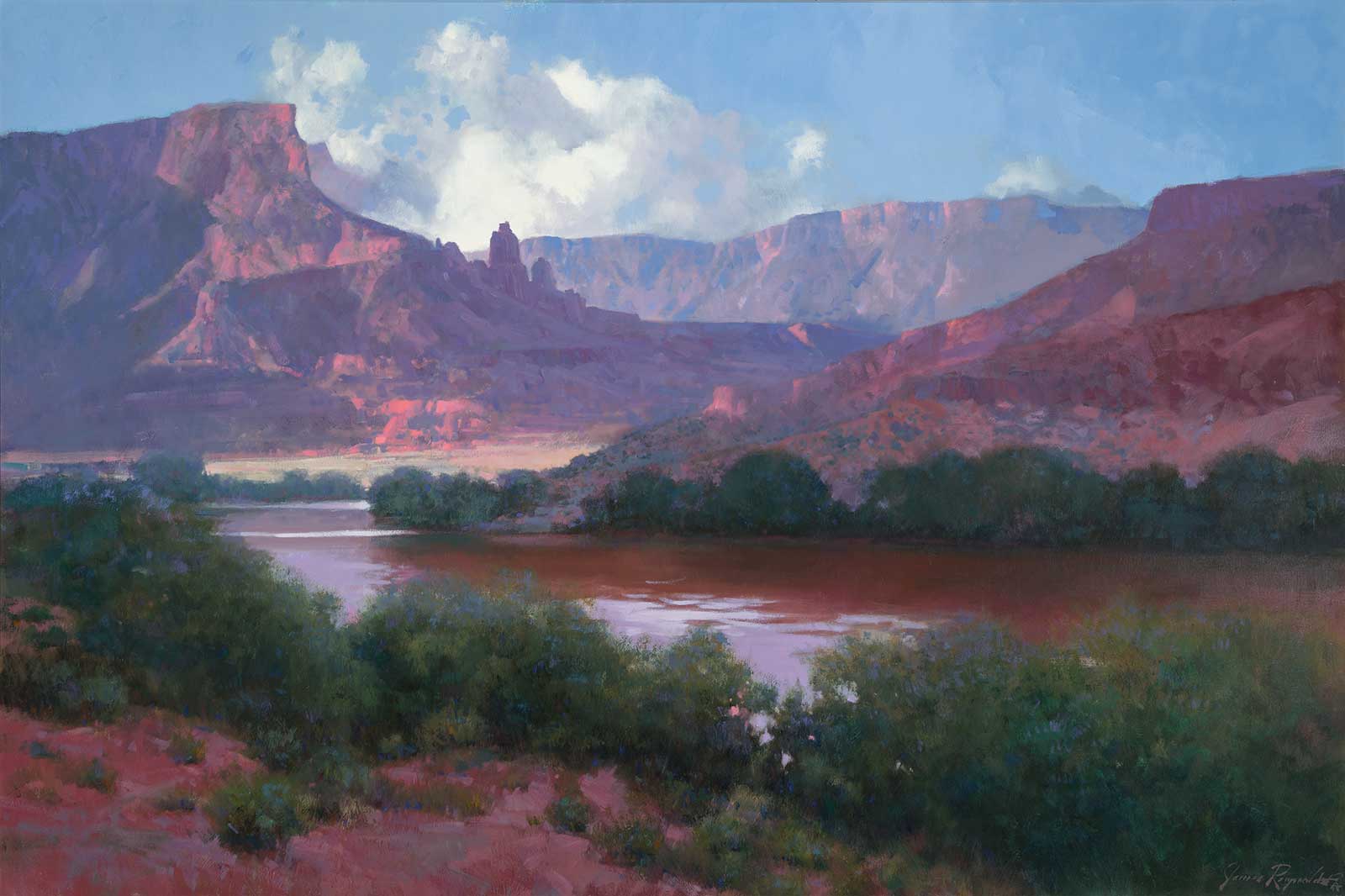 Great American West Gallery, The Colorado, oil on canvas, 40 x 60", by James Reynolds (1926-2010).
Tom Uttech’s paintings of the northern Minnesota and Canadian wilderness reflect his immersion in the experience of being in it. “I feel at home, complete and invisible,” he says. “I try to have my paintings contain and communicate that feeling.”
He encourages the viewer to experience the experience. “Since these pictures are about nature and our role in it, the knowledge gained might grow into love of nature, and thus into concern for its well-being. This concern could lead to action to protect nature and, therefore, ourselves. The best response to my paintings would be for you to…go straight to the wildest piece of land you can find and sit down to let it wash over you and tell you secrets.”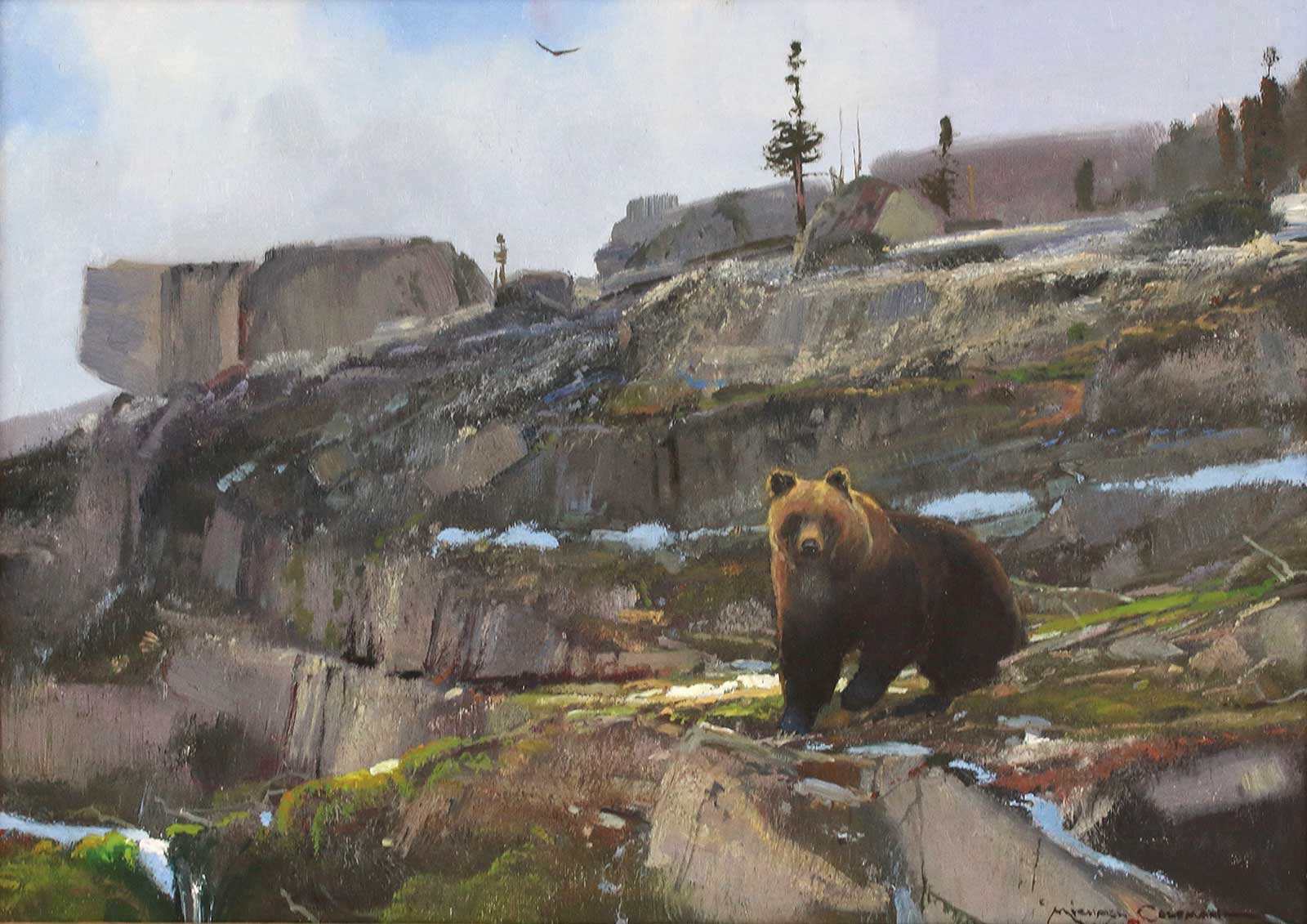 Broadmoor Galleries, Grizzly on Polo Pass, oil on board, 12 x 16", by Michael Coleman
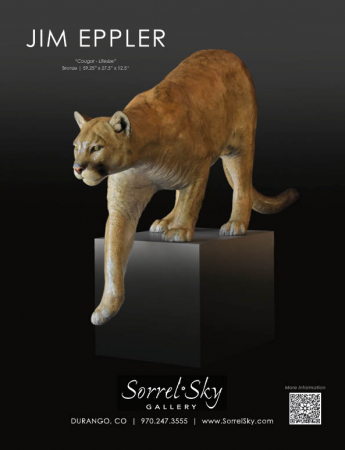
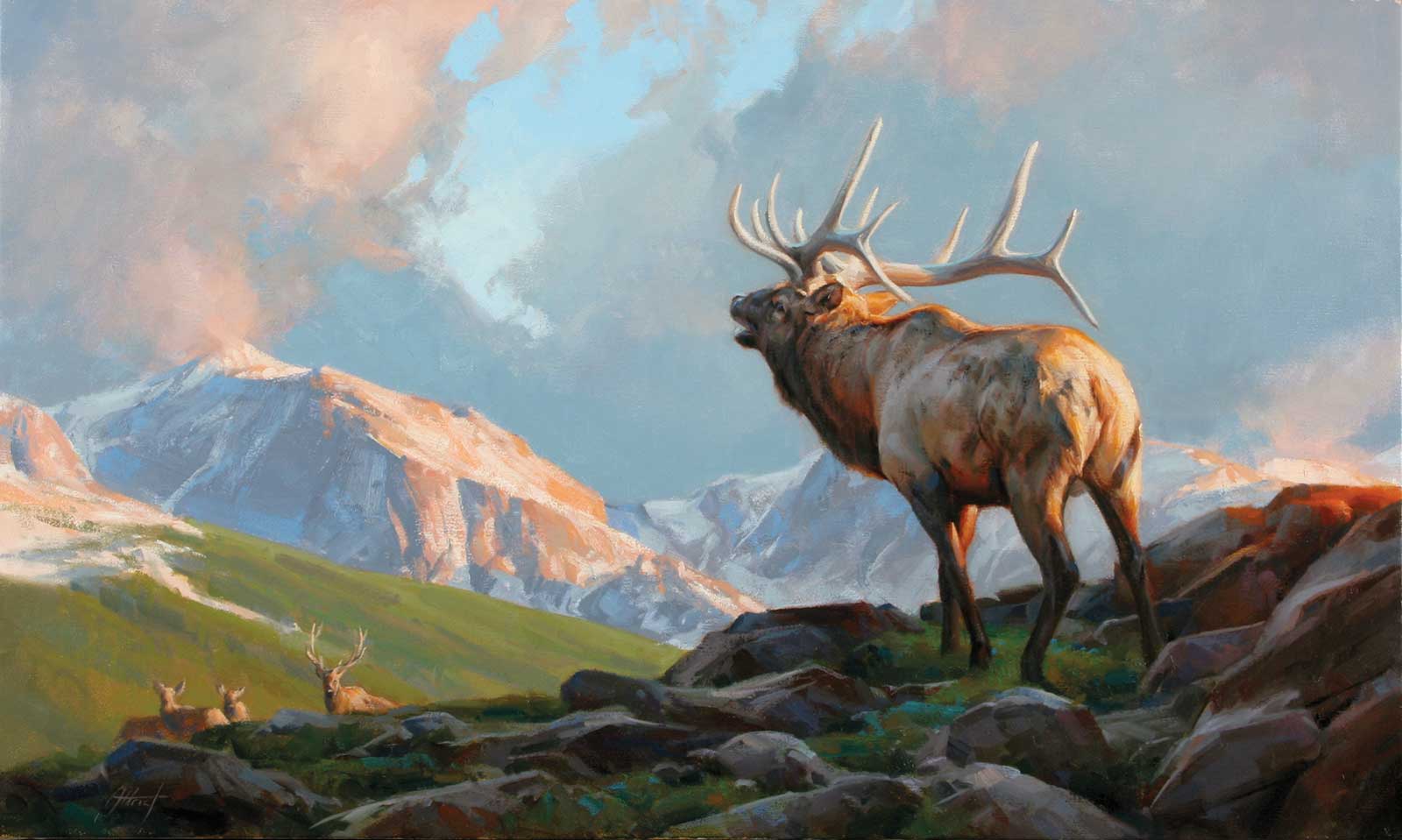 Sorrel Sky Gallery, Challenger, oil, 24 x 40", by Edward Aldrich
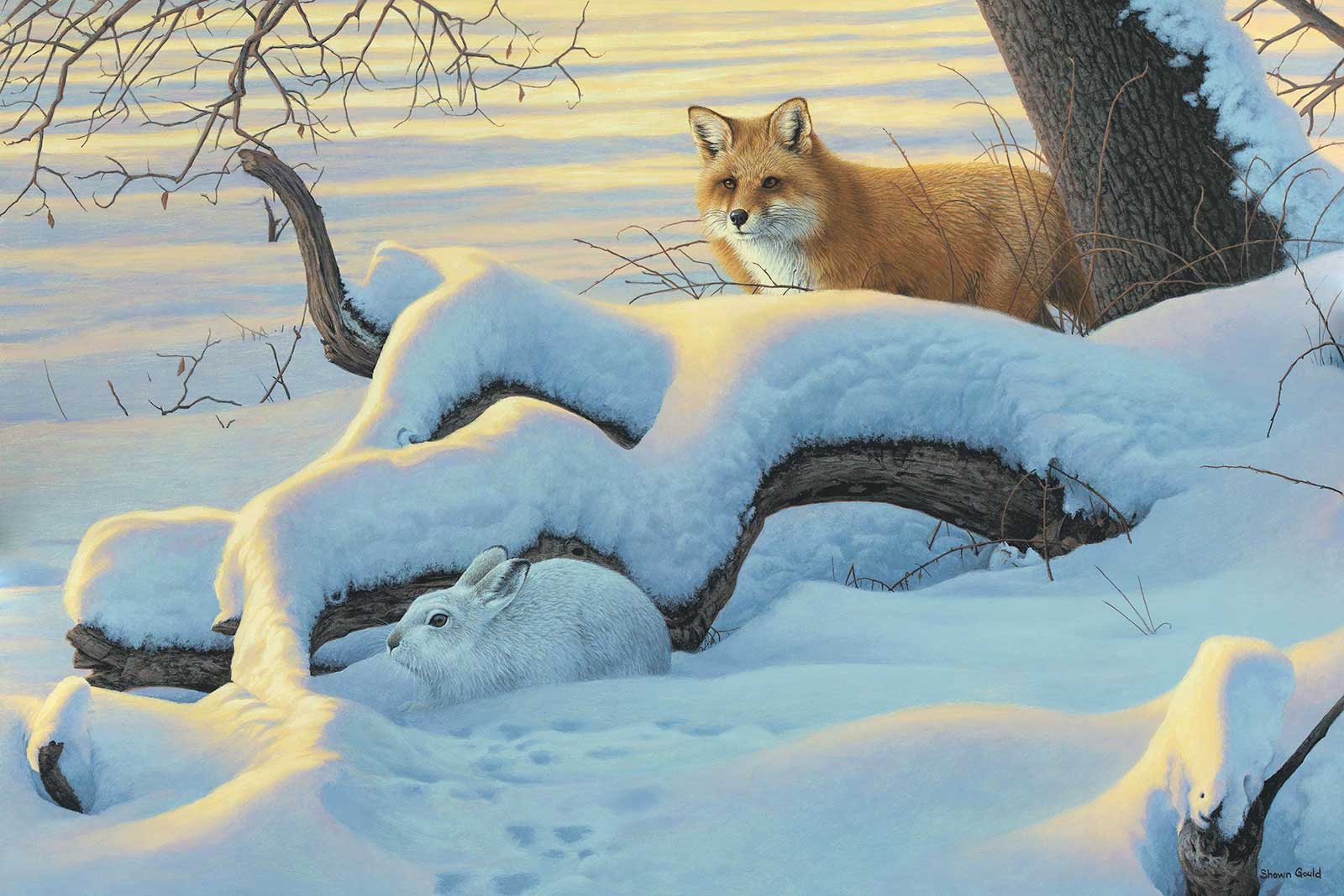 Sorrel Sky Gallery, Very, Very Quiet, acrylic, 20 x 30", by Shawn Gould.
Three wolves in his painting Gakiiwe (822) are curious about the observer of their wild habitat, perhaps willing to share their secrets.
Michael Coleman grew up hunting, fishing and trapping and, most often, taking his sketchbook along with him. He has been influenced by the 19th-century landscape masters Thomas Moran and George Inness, and the 20th-century animal painter, Carl Rungius.
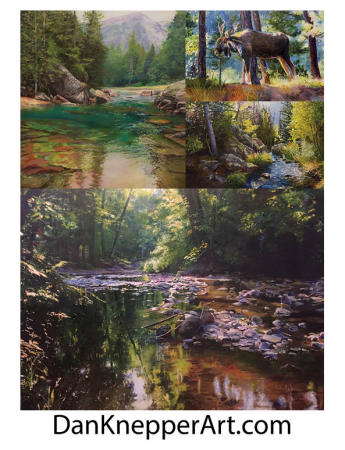
When painting bears, he often has them indulging in their curiosity about hunters’ camps, cubs cavorting in the forest and fathers protecting their domain. In Grizzly on Polo Pass, the grizzly appears ready to demonstrate his dominion, alert and with a paw raised in preparation for a dash.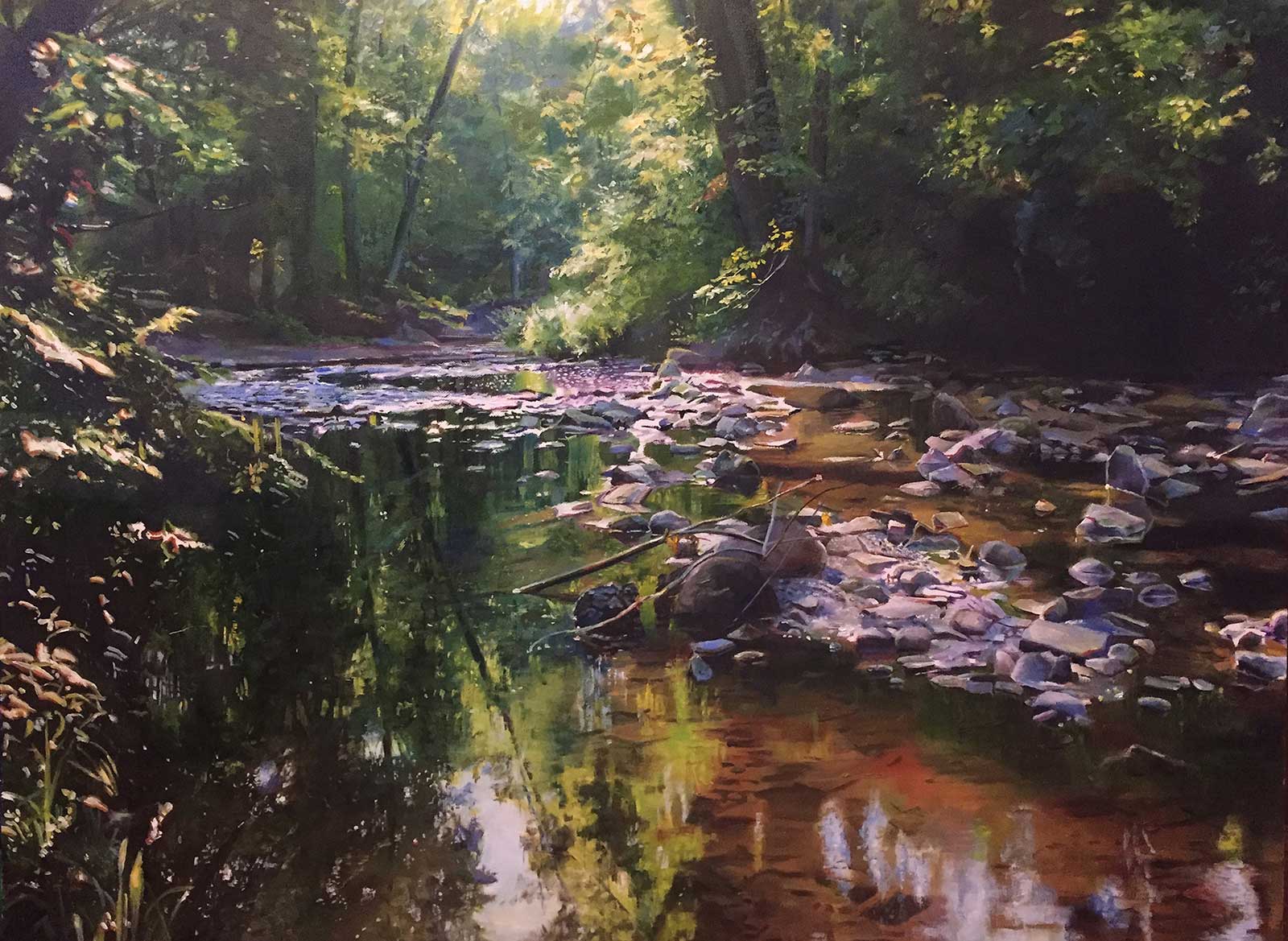 Dan Knepper, If I Could Walk On Water, oil on canvas, 30 x 40"
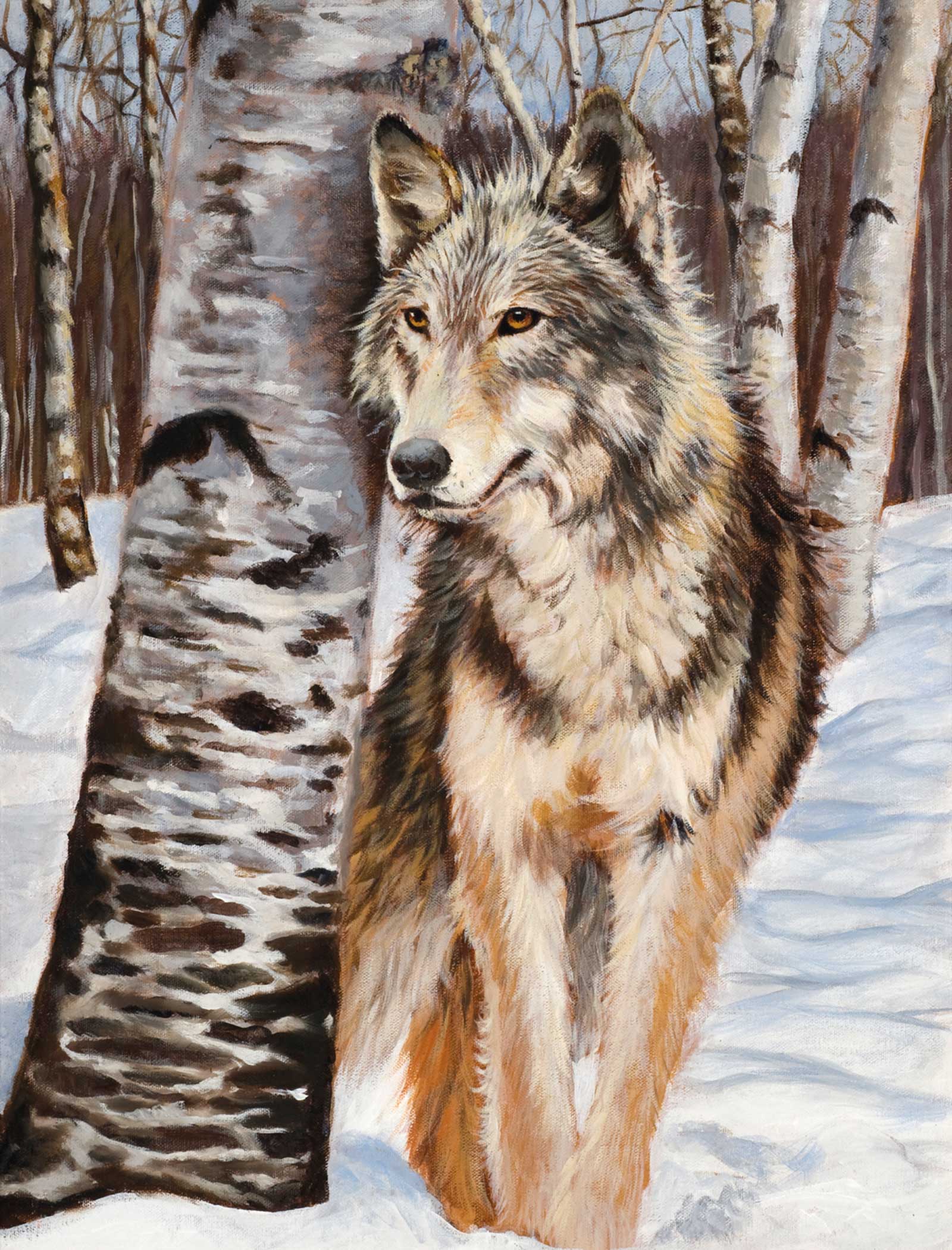 Victor Blakey, Wolf Amid The Aspen Trees, oil on canvas, 24 x 18"
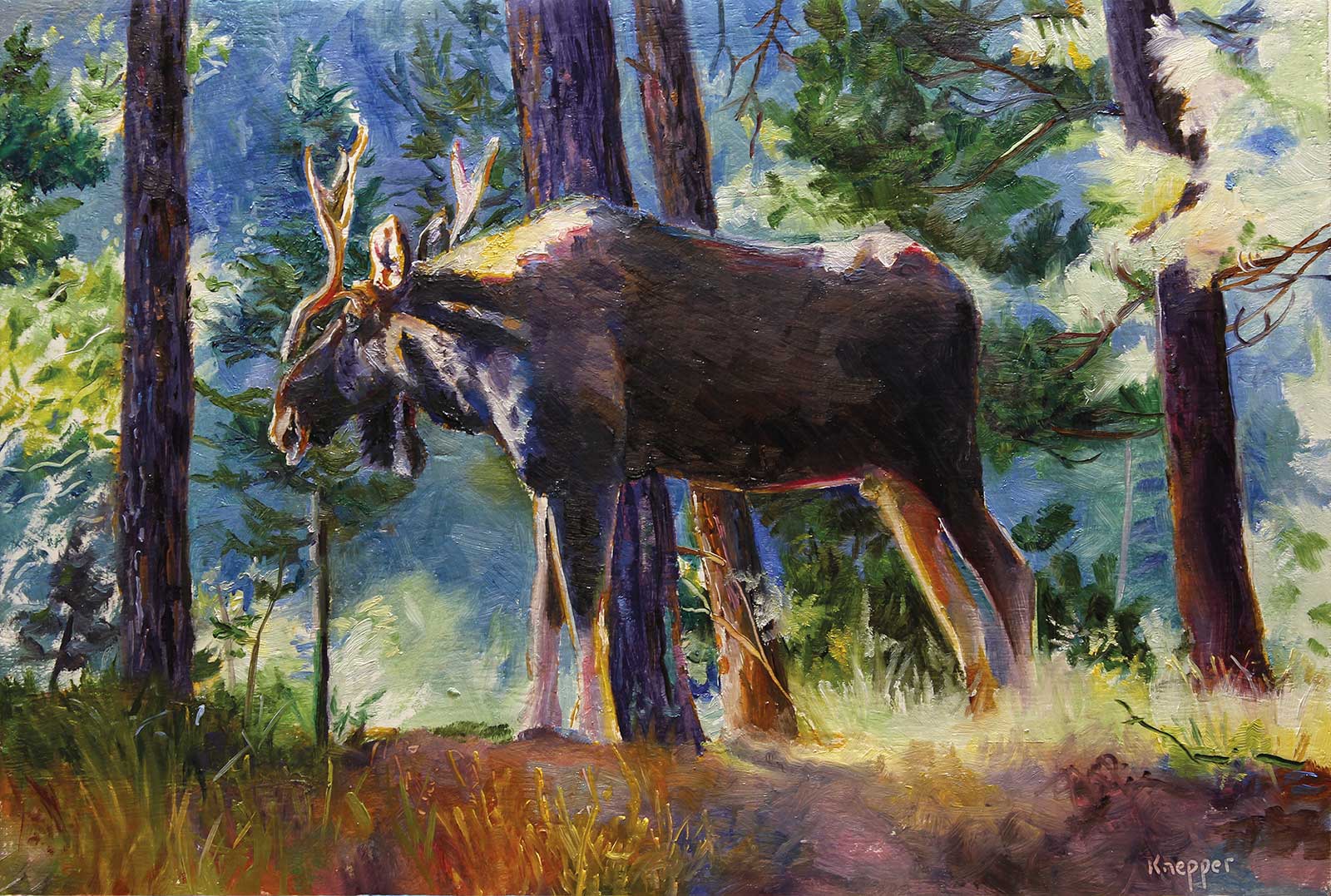 Dan Knepper, Morning Meeting, oil on panel, 8 x 12"
Ken Salaz paints nature itself, its primordial energy devoid of the presence of humans or other animals. In Grace, rejuvenating water falls over the rocks, its mist capturing and intensifying the sunlight. Salaz writes, “No serious pursuit of the craft and artistry of painting can leave a person indifferent to the mysteries and wonderment of the world around us and within us. In an age where the ideas of having a Noble Pursuit are almost vanishing, I feel it is imperative to the world today and humanity that the creation of Artwork that strives towards Harmony, Truth, and Beauty be brought into existence without apology. To obtain this, I approach each canvas with the Heart of a Poet, the Mind of a Philosopher, the hands of a Surgeon and the Vision of an Eagle.”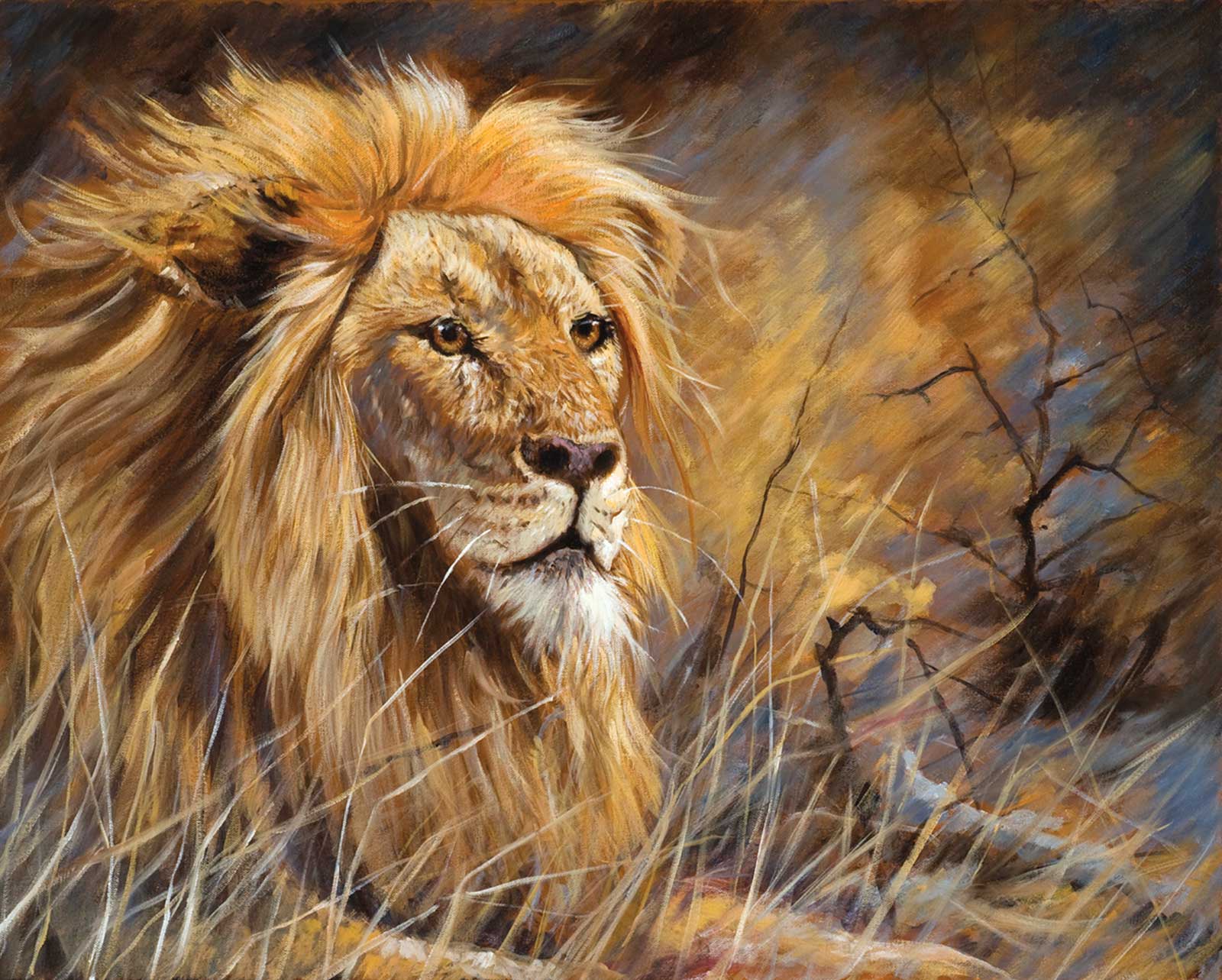 Victor Blakey, Independent Lion, oil on canvas, 18 x 24"
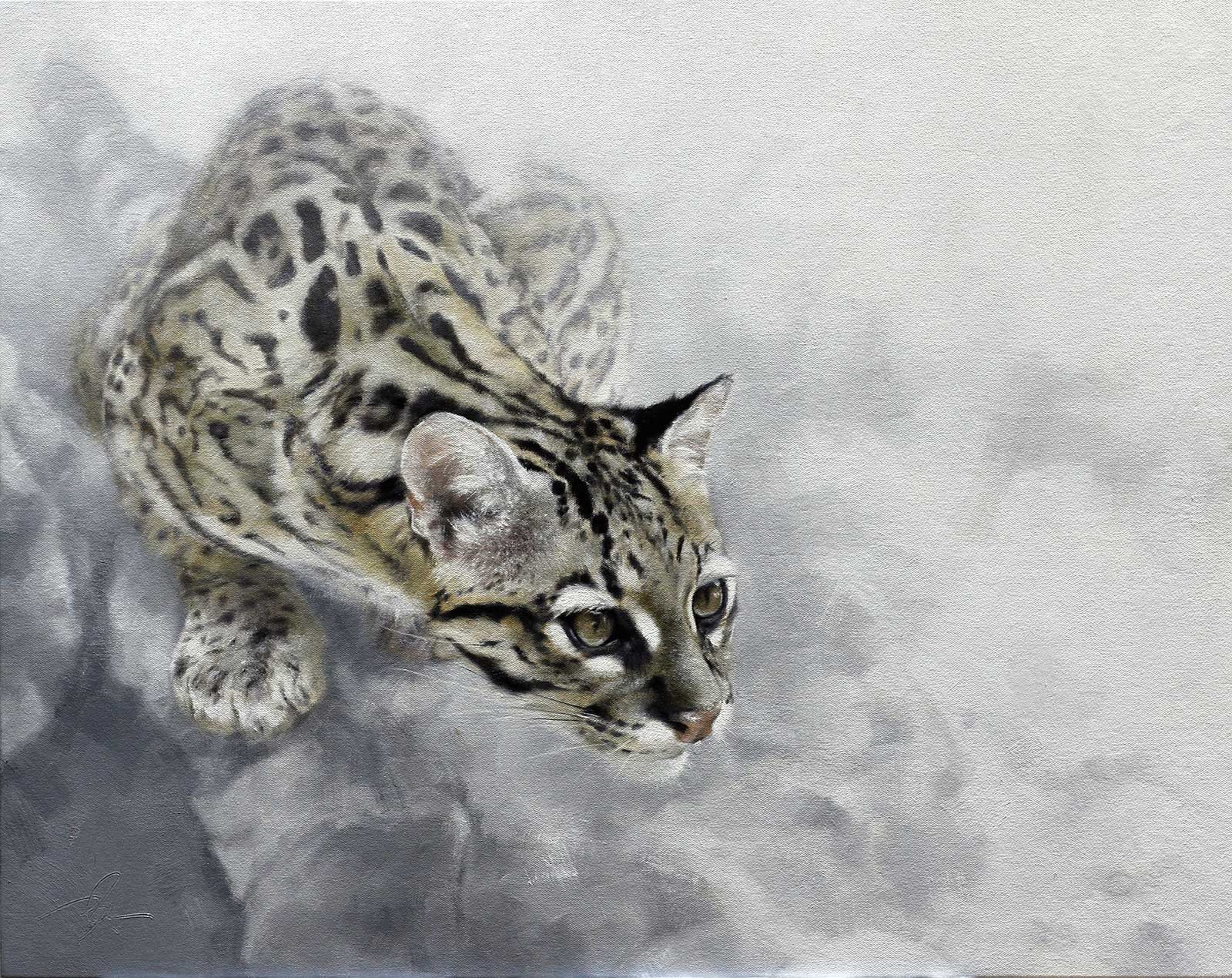 Sorrel Sky Gallery, Spotted, oil, 24 x 30", by Doyle Hostetler.
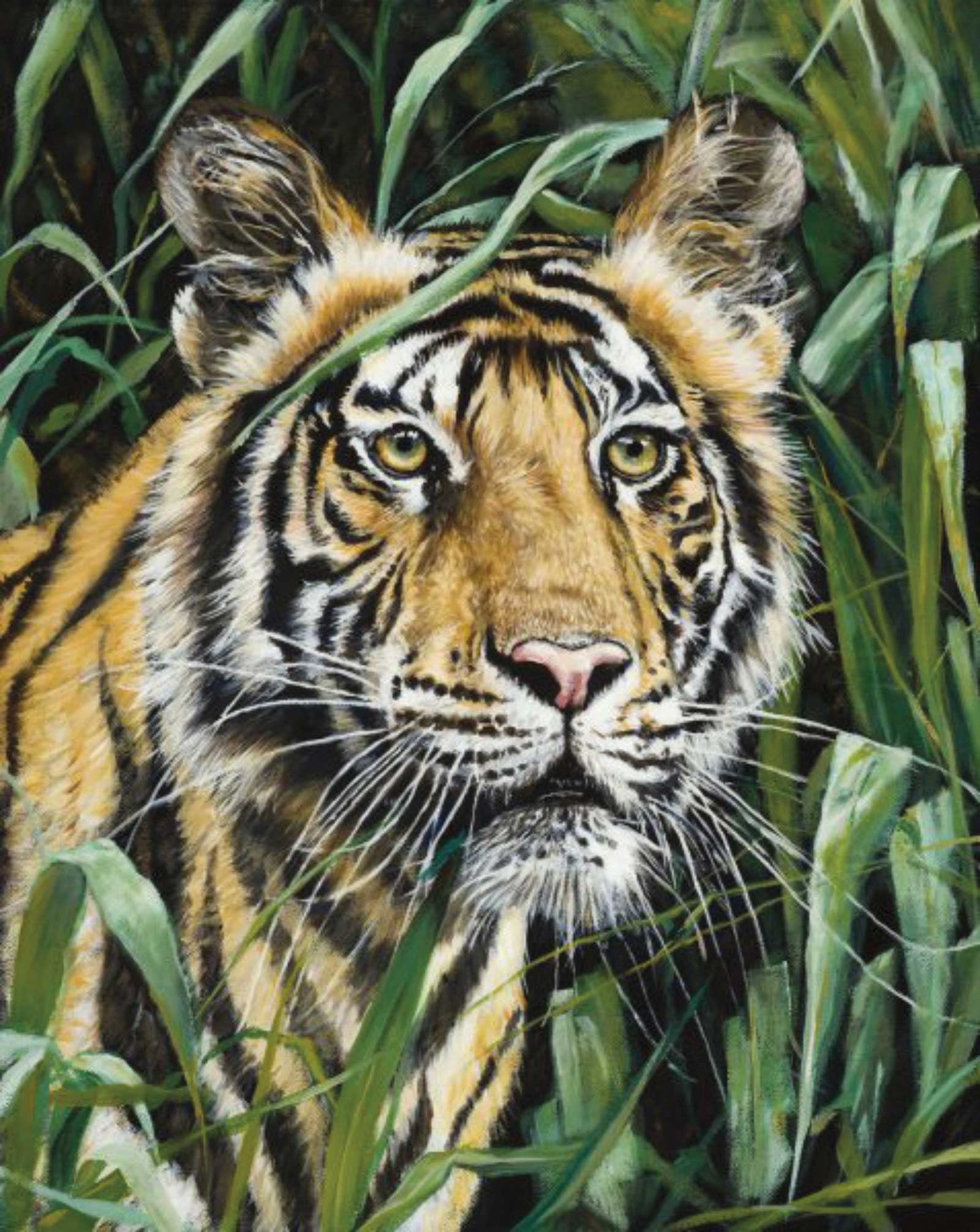 Victor Blakey, Tiger in the Grass, oil on canvas, 20 x 16"
Throughout the pages of this special section collectors can embark on adventures through more wilderness scenes. These paintings capture the beauty of the Western landscape as well as the spirit of the wildlife that inhabit it.
The Great American West Gallery in Dallas features original Western, wildlife, sporting and Texas art of the 20th and 21st centuries. Among the artists represented are the late Bob Kuhn and James Reynolds. “Painted in the artist’s prime period, North Country exhibits Kuhn’s mastery of both figurative painting as well as impressionistic but realistic landscapes,” the gallery notes. “[Reynolds’ The Colorado] is the largest and most majestic landscape painting ever completed by one of the finest Western colorists of the last century.”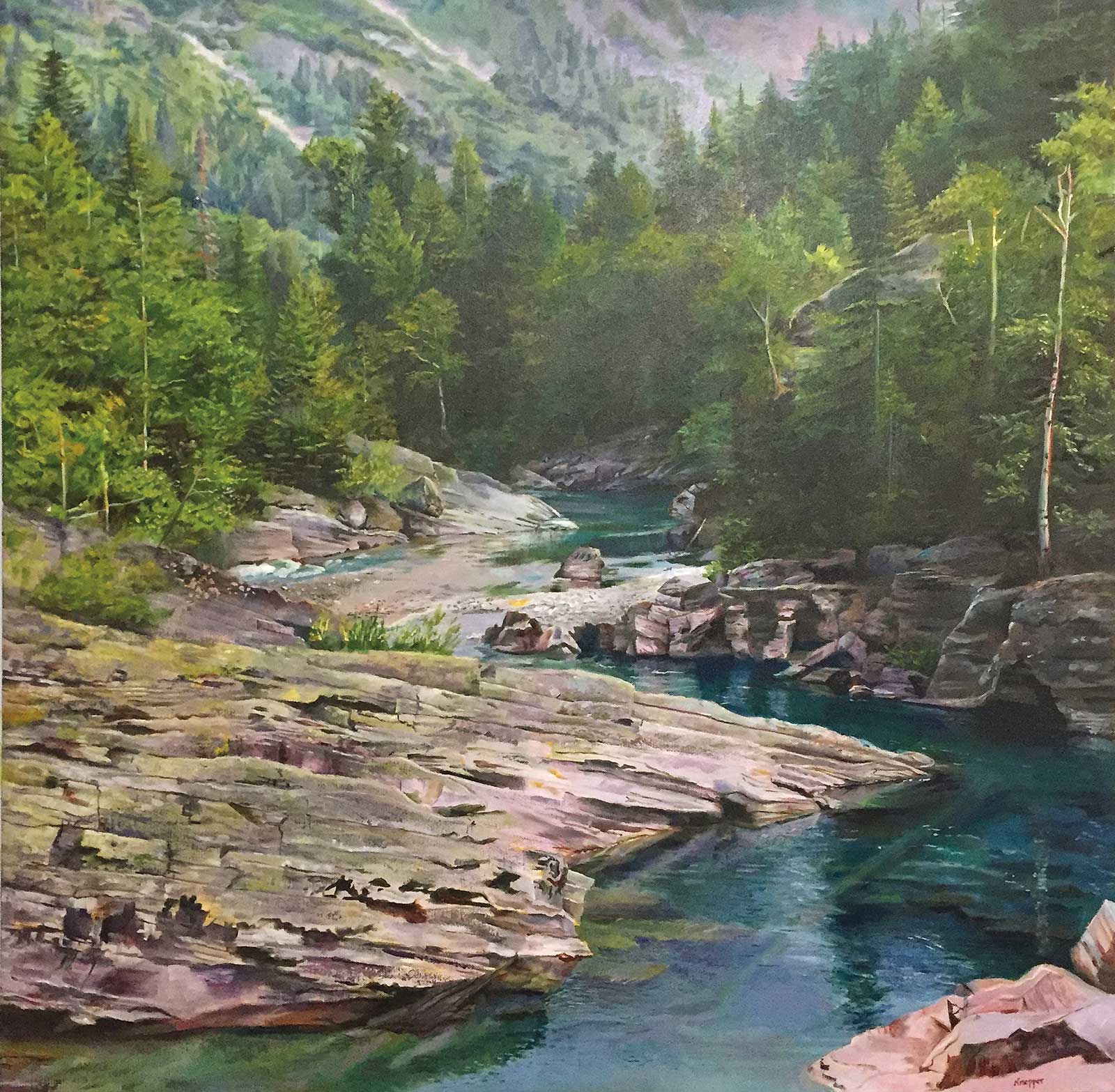 Dan Knepper, Wander, oil, 36 x 36"
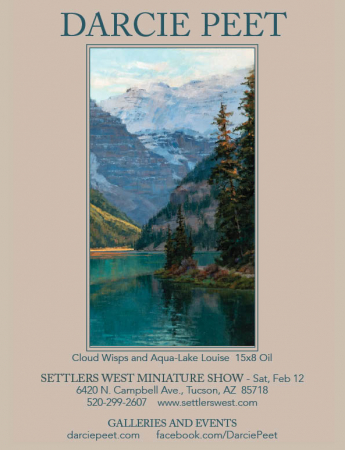
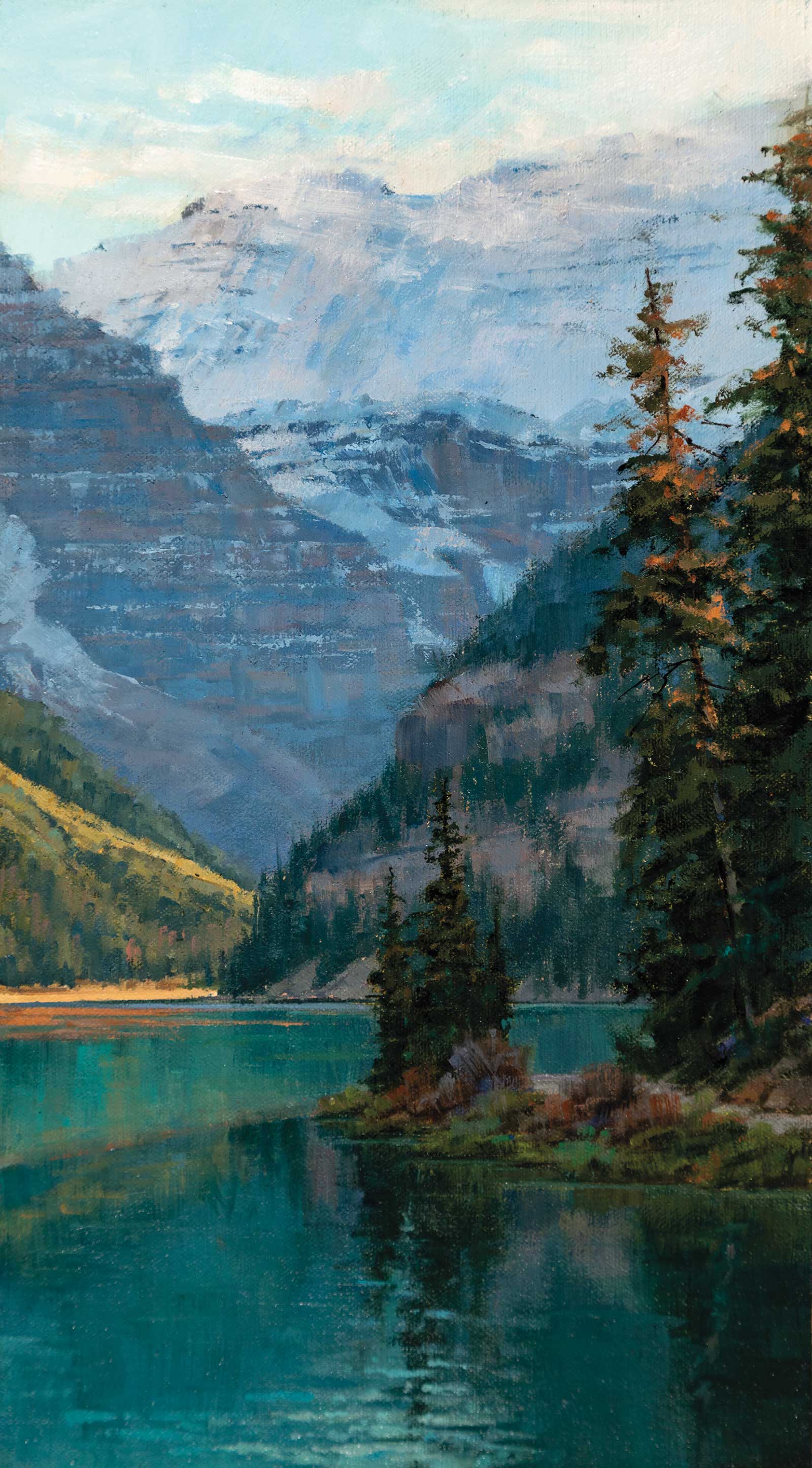 Darcie Peet, Cloud Wisps and Aqua-Lake Louise, oil, 15 x 8"
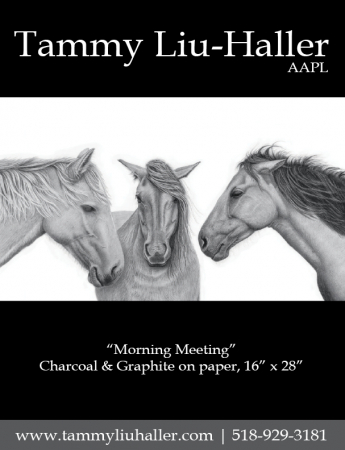
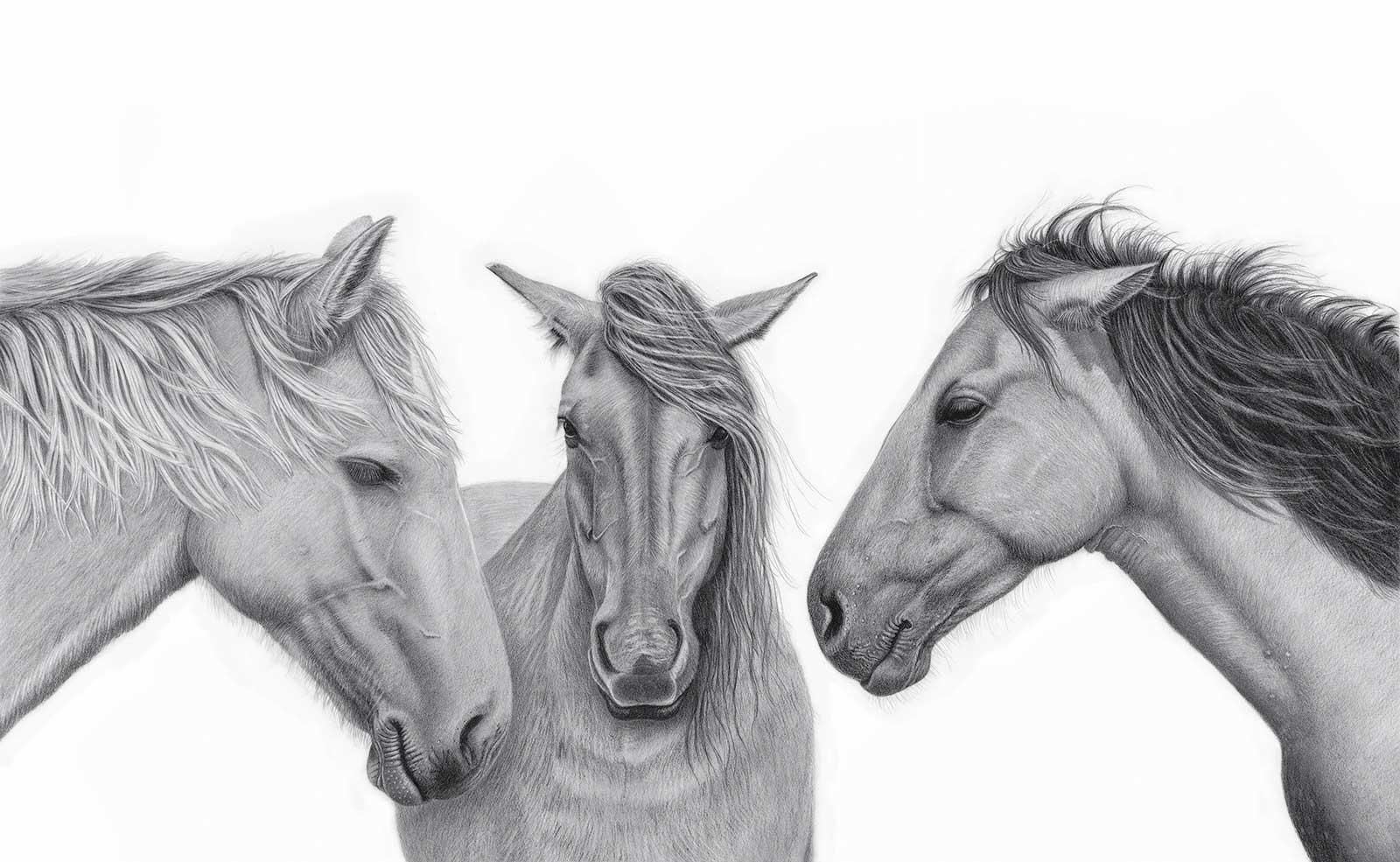 Tammy Liu-Haller, Morning Meeting, charcoal and graphite on paper, 16 x 28"
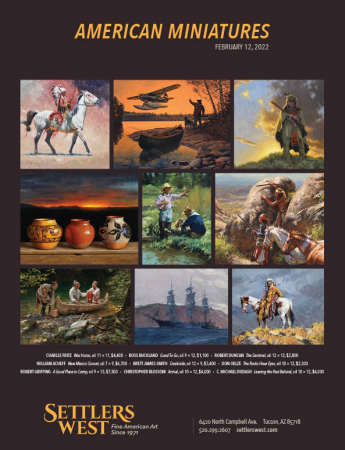
Landscape and portrait artist Dan Knepper will be showing a new oil painting, If I Could Walk On Water, in the 2022 Jackson Hole Art Auction. The painting depicts a soft, serene water scene. “The birds were welcoming the morning as the mist lifted off this secluded spot, and the morning sun was illuminating the foliage,” Knepper says of the piece. “It’s a favorite of mine, because I think it really shows the awe and connection I try to capture. I also like the multiple depth with the stones seen through the almost mirror-like reflection.” Another piece, Morning Meeting, will be part of the Settlers West American Miniatures show in February.
“Artwork that focuses on landscapes and wildlife allows us to have encounters with places and animals that many of us may never see in person,” says Shanan Campbell, owner of Sorrel Sky Gallery. The gallery has locations in both Durango, Colorado, and Santa Fe, New Mexico, and highlights an array of fine art including Western, Native American and landscape art. “The artists who take us into the wilderness through their work let us, both art lovers and collectors, bring the grandeur and wonder of these encounters right into our homes, into our everyday lives,” says Campbell.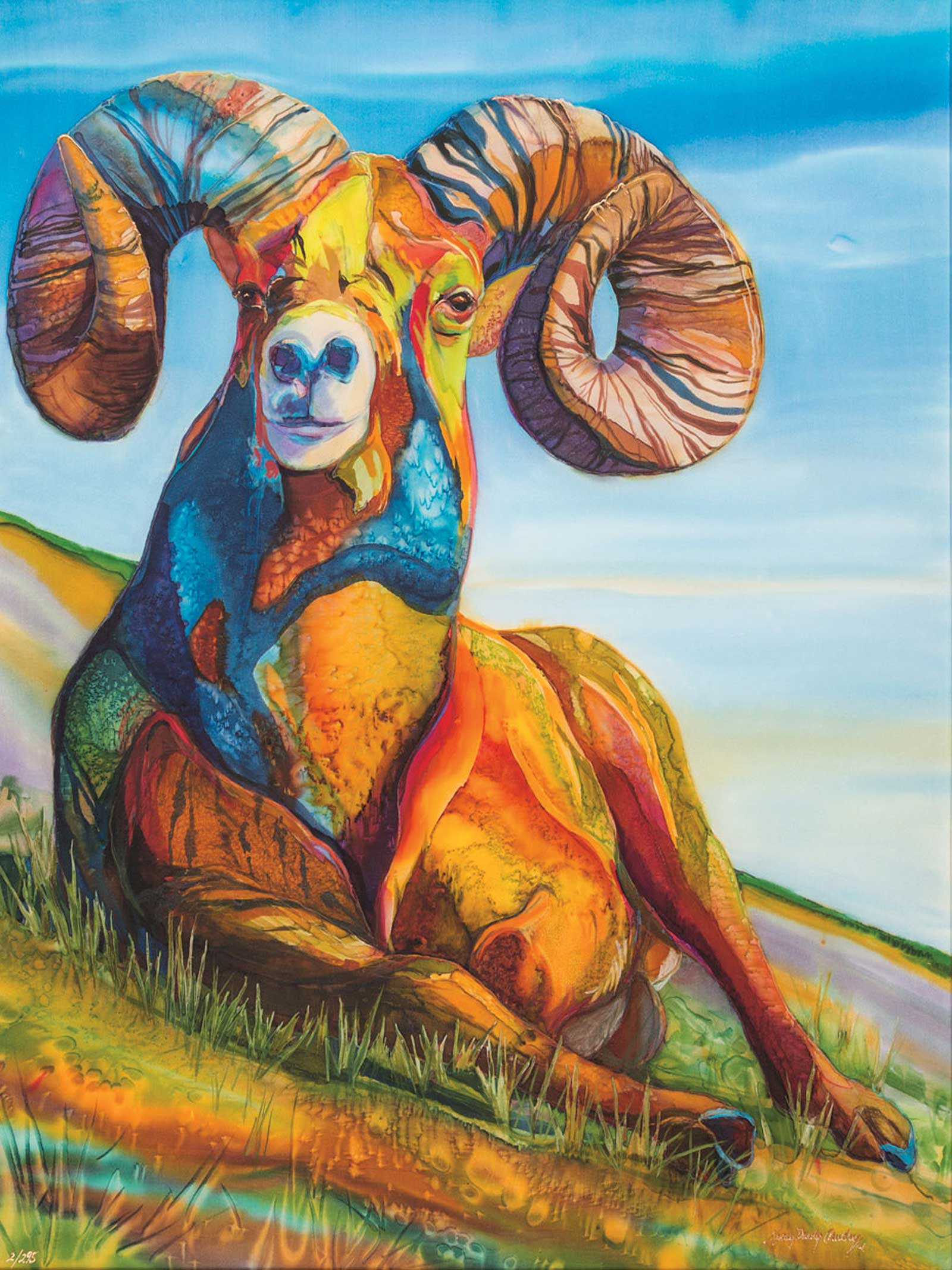 Booth Western Art Museum, Forever Glacier: Ovis Canadensis, dye on silk, 40 x 30", by Nancy Dunlop Cawdrey. © Nancy Dunlop Cawdrey. Sponsored by Tom and Cindy LaChance.
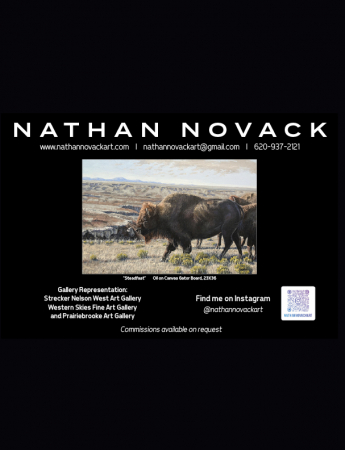
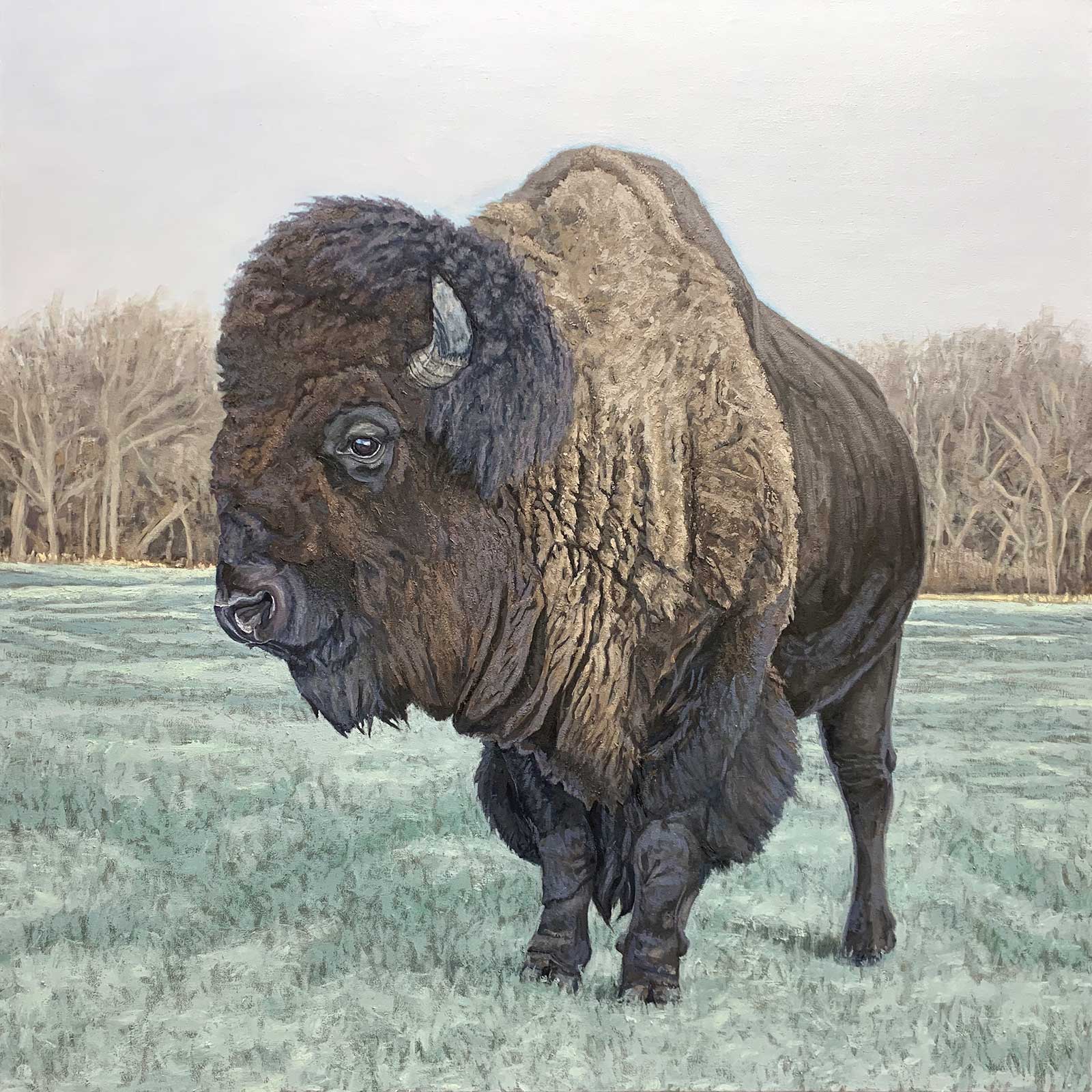 Nathan Novack, Stand Your Ground, oil, 48 x 48”
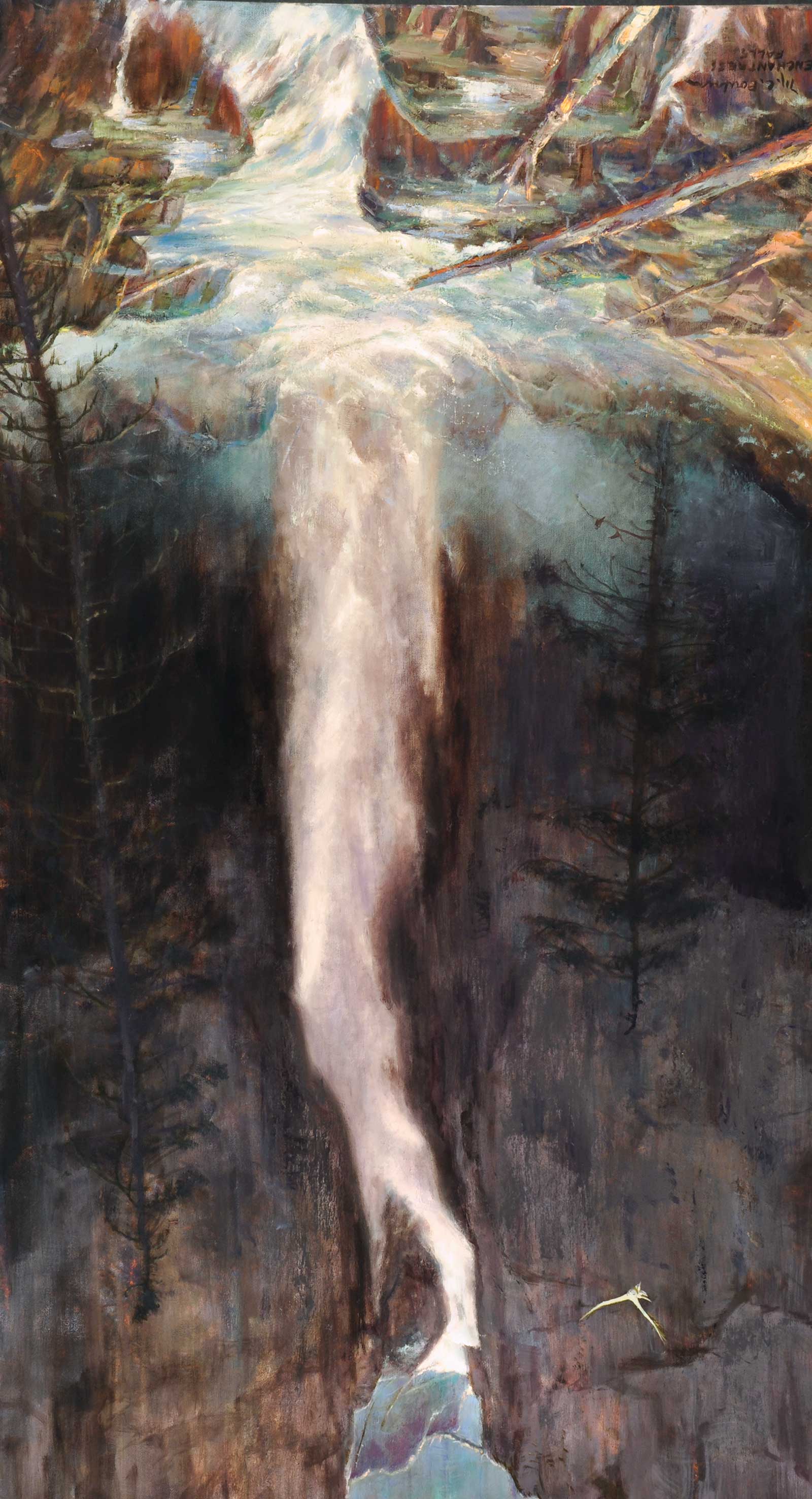 Booth Western Art Museum, Enchantress Falls, oil on canvas, 40 x 24", by M.C. Poulsen. © M.C. Poulsen.
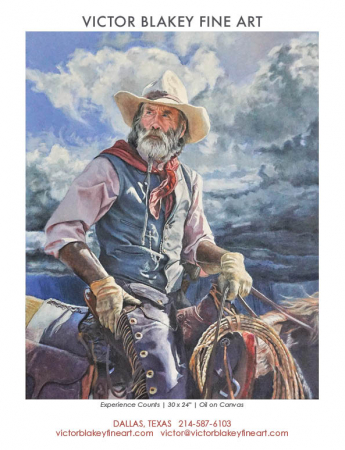
Victor Blakey paints Western and wildlife art, as well as portraits and florals, with a sense of energy and boldness. “Animals, unlike humans, live in harmony with nature. They have no malice nor secrets to conceal and painting them is an act of joy,” says the Dallas-based artist.
The story behind Darcie Peet’s Cloud Wisps and Aqua-Lake Louise is one of grit and adventure. “Lake Louise’s stunning and easy lakeshore trail along those gem-like waters does not begin to foretell the day’s long, uphill hike to the base of Mt. Victoria and our destination,” Peet tells. “From the far end of the lake, the climb takes us through subalpine forest, open, wildflower strewn hillsides to expansive slopes of low shrubs and the myriad textures and colors of above-timberline, ground covers. Grizzly sightings stopped hikers for a short time, but we were later able to continue on to the Lake Agnes Teahouse, and from there, higher to the Plain of the Six Glaciers Teahouse…Across the glacier and far above, we could spot Abbot Climbing Hut perched high on Abbot Pass…[a route] known as the ‘Death Trap.’ As the sun slowly dropped behind Mt. Victoria, we returned once again to the welcome, level, lakeshore trail paralleling jewel-like, aqua Lake Louise. Tired feet and a long day, but what a glimpse into a bold, rugged and humbling backcountry—just what I was seeking for future paintings.”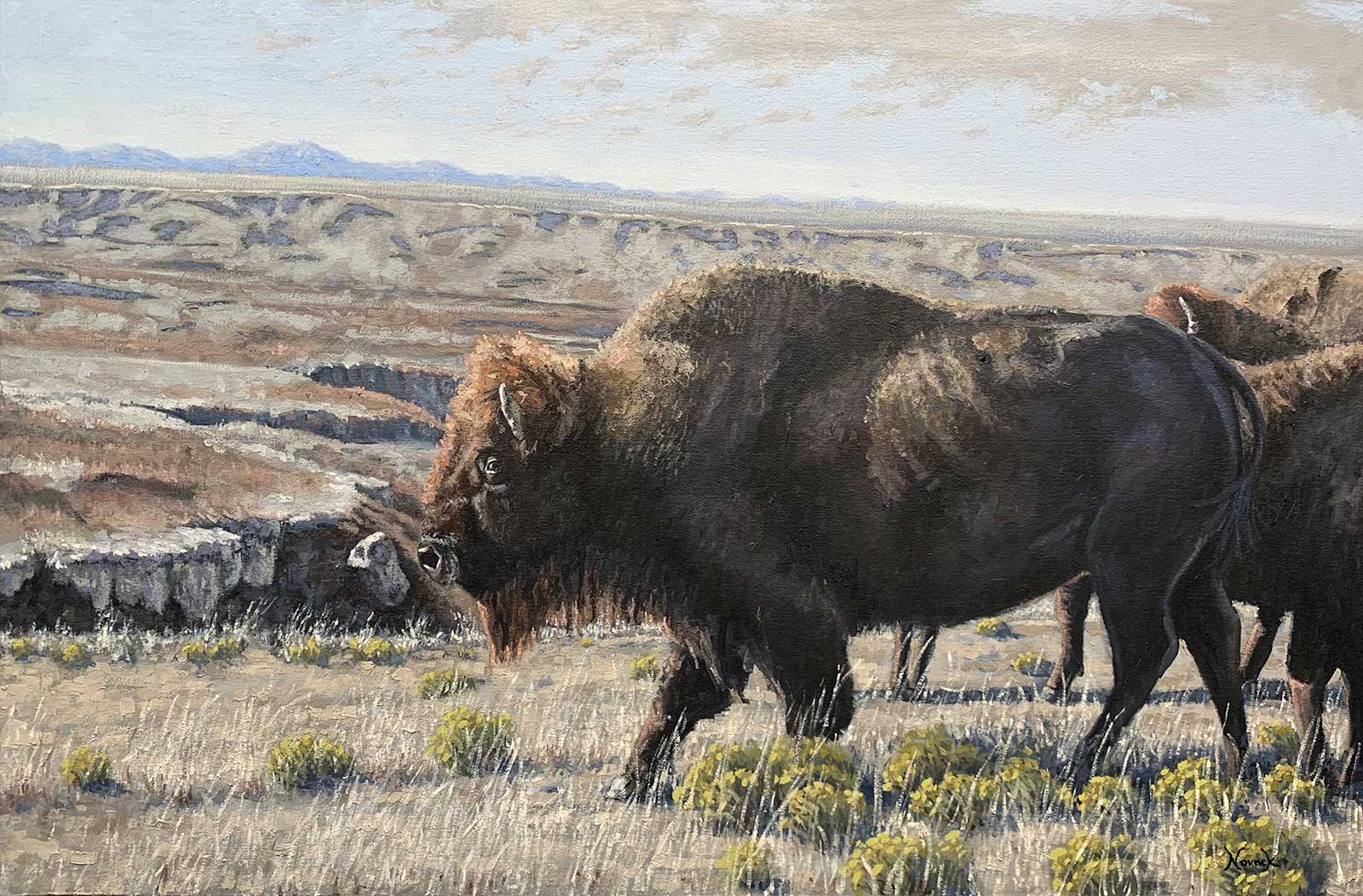 Nathan Novack, Steadfast, oil, 23 x 36"
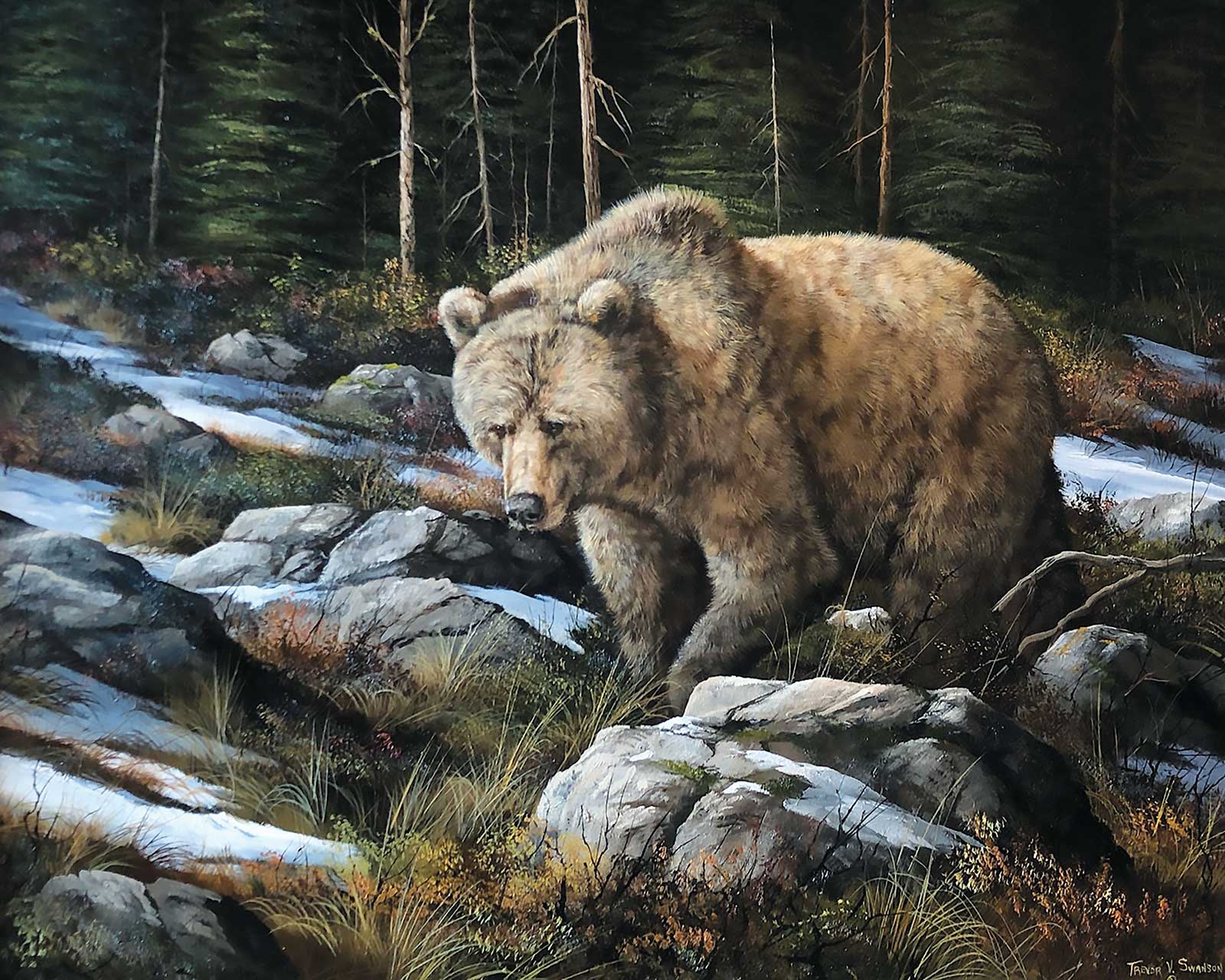 Legacy Gallery, The Remains of the Last Snow, oil, 24 x 30", by Trevor Swanson.
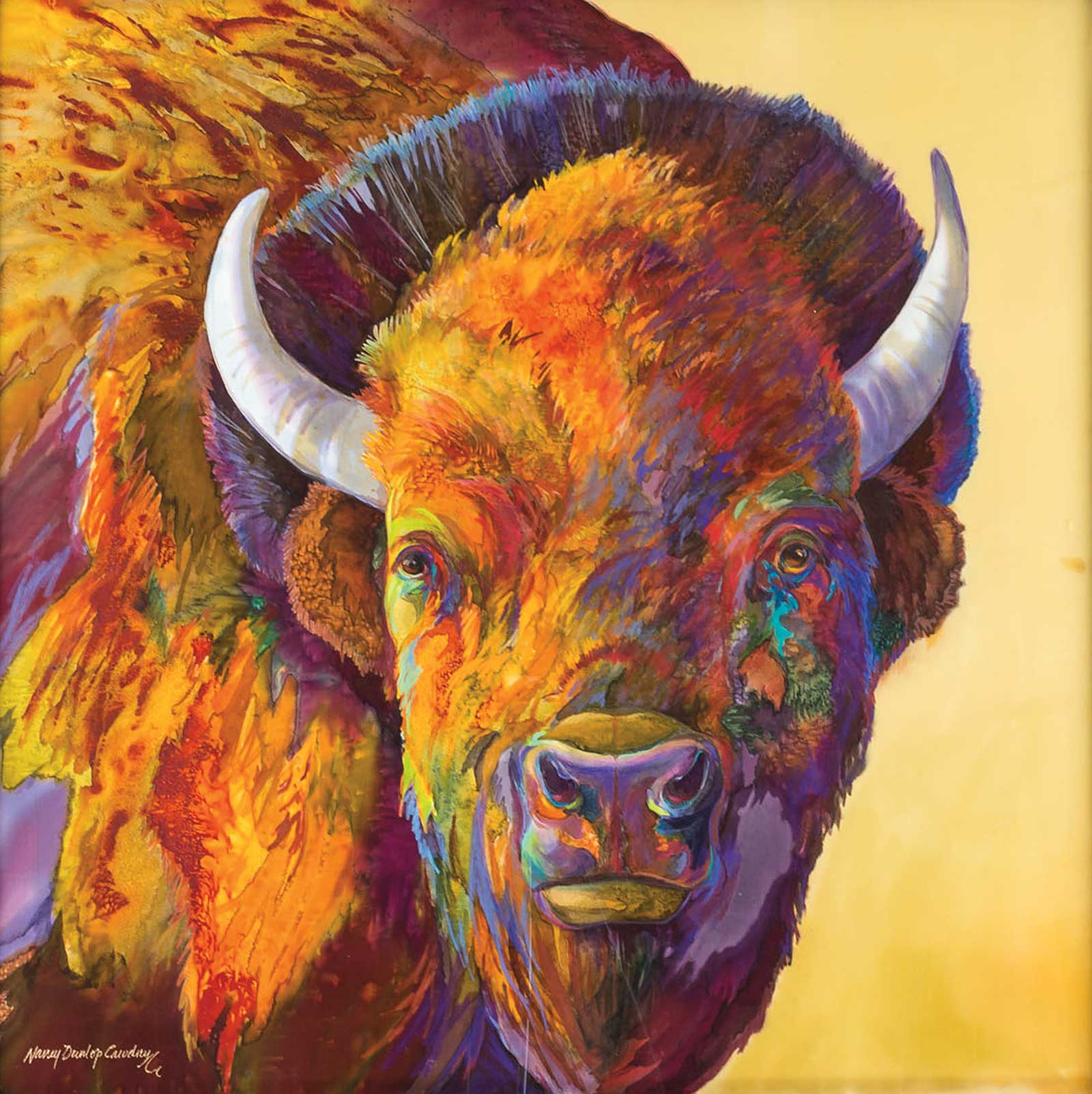 Booth Western Art Museum, Forever Glacier: Bison bison, dye on silk, 36 x 36", by Nancy Dunlop Cawdrey. © Nancy Dunlop Cawdrey. Sponsored by Clearwater Montana Properties.
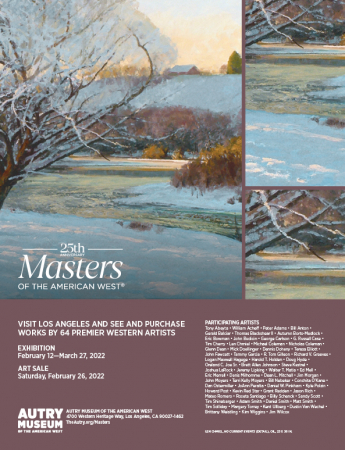
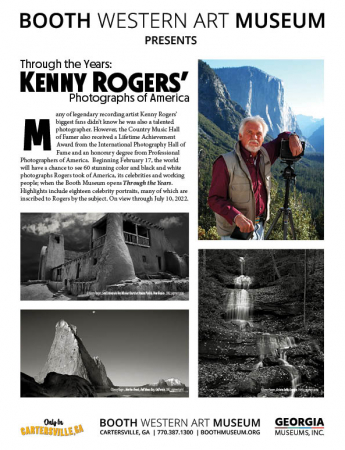
Running through February 27, the Booth Western Art Museum is hosting two concurrent exhibitions, Mammals in Glacier: Nancy Dunlop Cawdrey and Waterfalls in Yellowstone: M.C. Poulsen. Each exhibition focuses on explorations of nature and our nation’s national parks, featuring important works of art by two of the foremost Western and wildlife artists of the day, Nancy Dunlop Cawdrey and M.C. Poulsen.
“I want the viewer to see what I see when I look at animals. The beauty and intrigue that every single one possesses,” says Greenville, New York-based artist Tammy Liu-Haller. “In doing so, perhaps they will want to learn more about them. To accomplish this, I render my subjects in immense detail and often without a background, so as to keep the focus on them.” Her charcoal and graphite Morning Meeting captures the detail and form of three horses, their muzzles coming together at a single point.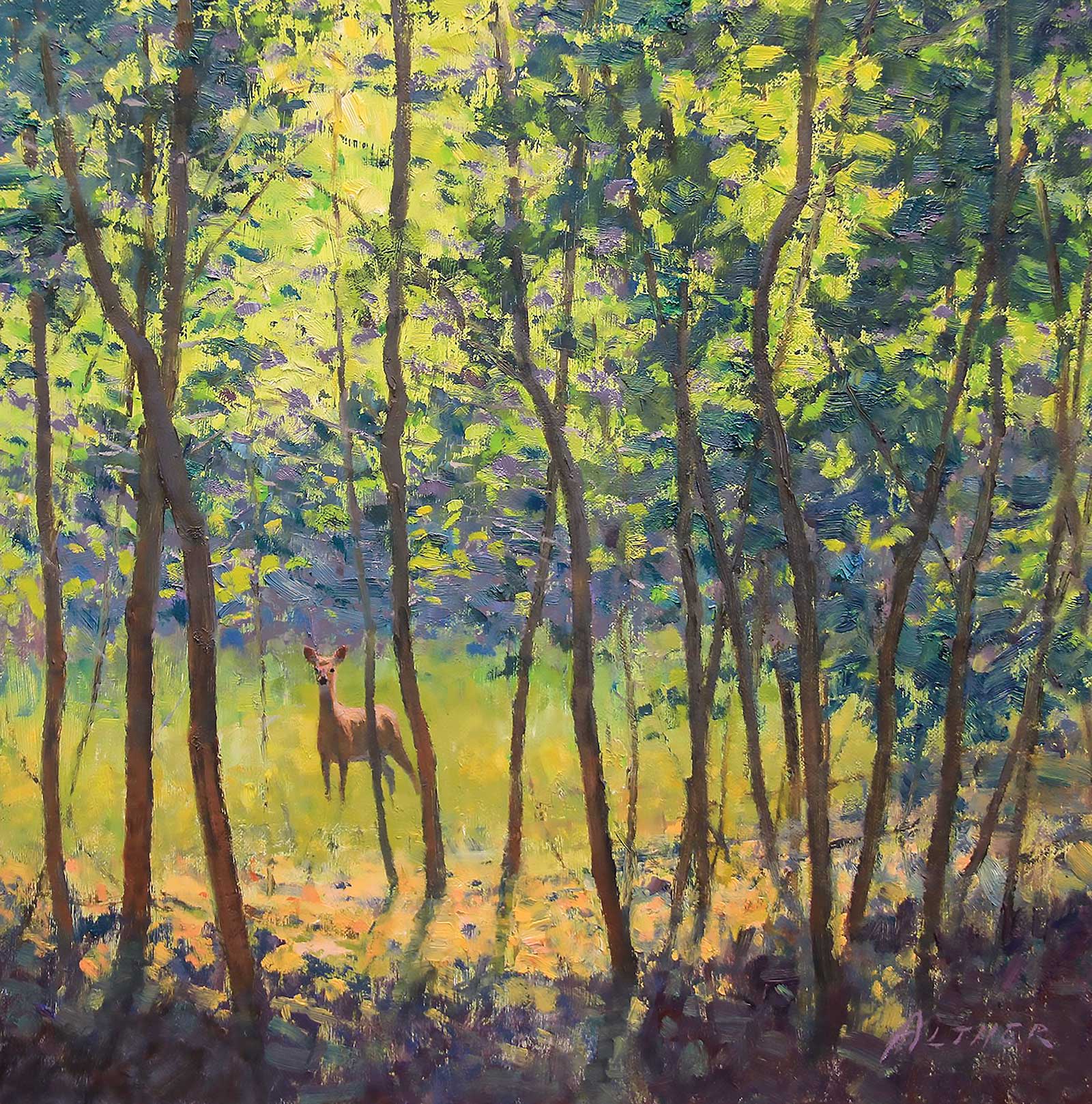 Legacy Gallery, Emerald Woods, oil, 14 x 14", by William Alther.
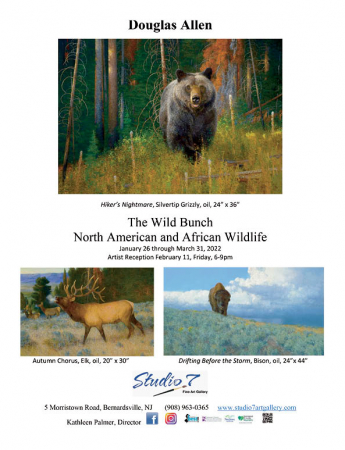
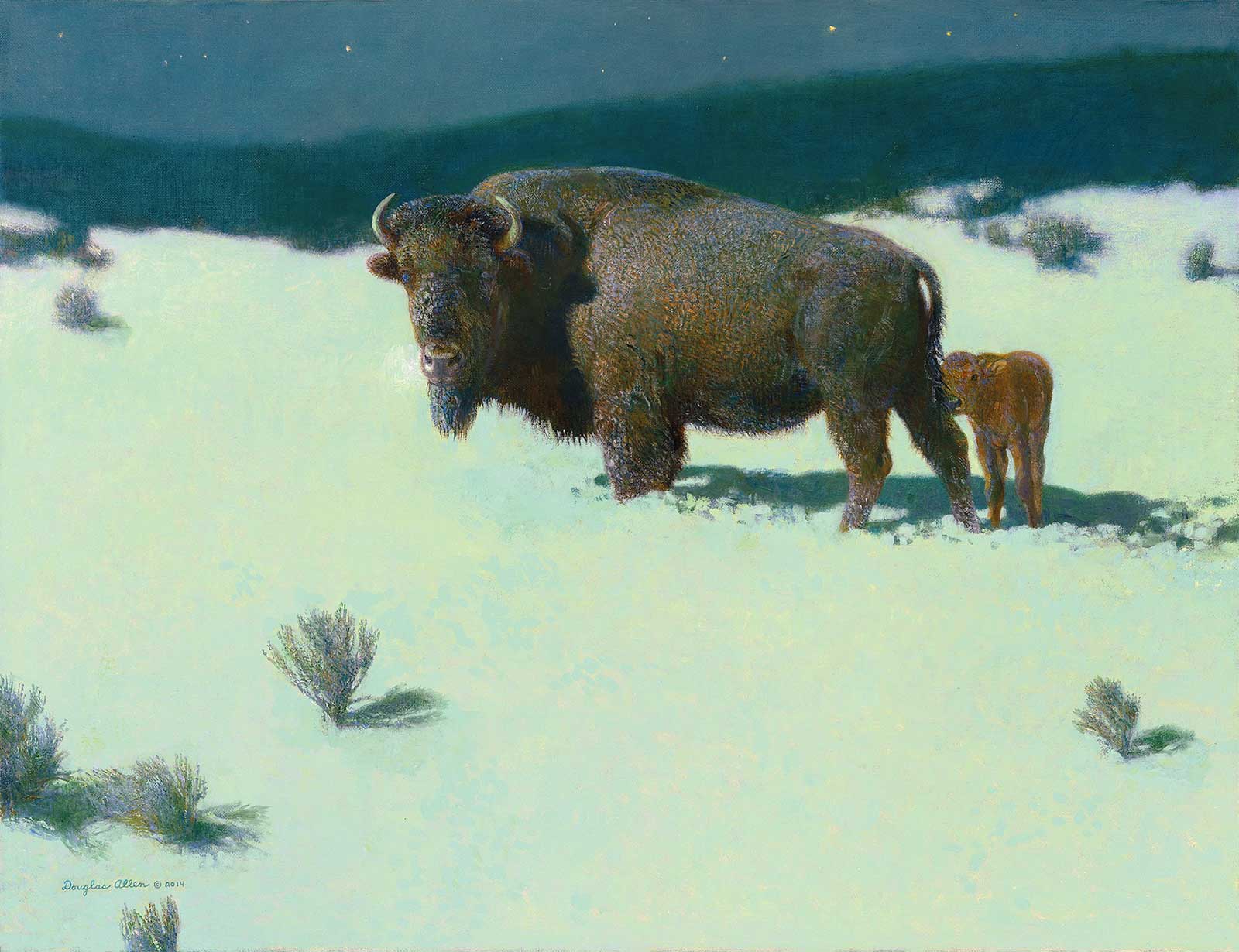 Studio 7 Fine Art Gallery, The Guardian, American Bison in Snow, oil, 20 x 26", by Douglas Allen.
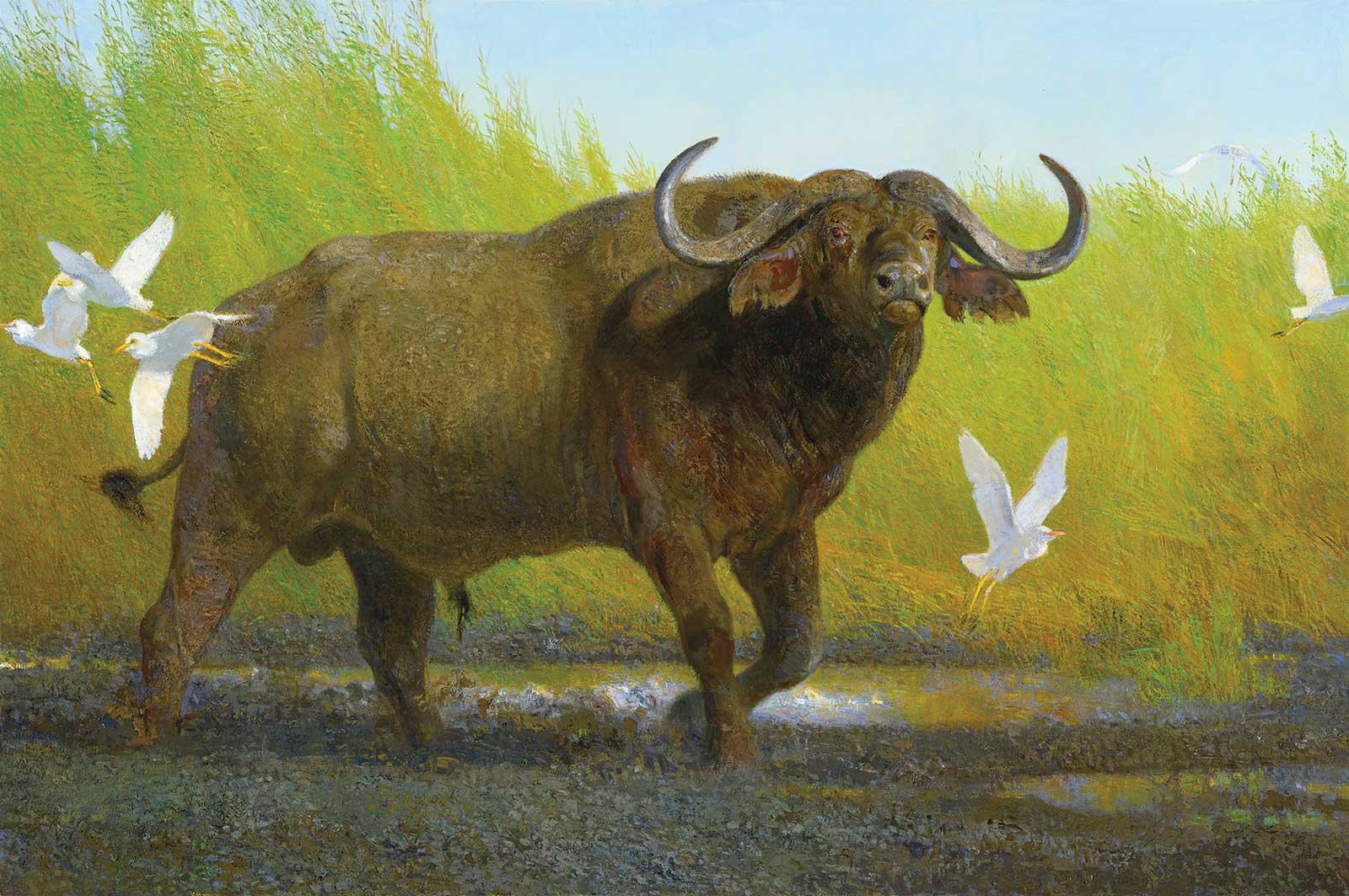 Studio 7 Fine Art Gallery, Breaking Bad, African Cape Buffalo, oil, 20 x 30", by Douglas Allen.
The artwork of Nathan Novack resembles a more traditional style, alongside a contemporary aesthetic of looser brushstrokes and bolder application. “Many [of my paintings] begin with inspirations out in the elements capturing and studying [nature].I truly enjoy the majestic ambiance of animals that pose many great qualities…I [also] enjoy the importance of historical connections I can make with the crossing paths of people and the surrounding animals we encounter.”
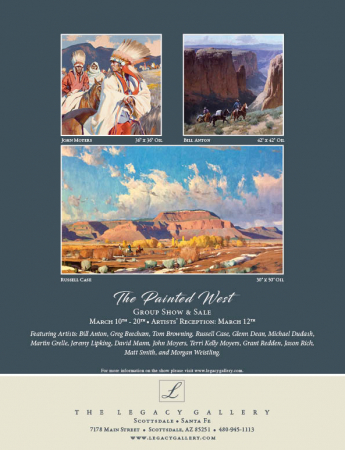
Offering works in oil, acrylic, charcoal, mixed media, bronze and stone sculpture and more, the Legacy Gallery in Scottsdale, Arizona, is a treasure trove of superb Western art. The gallery features an array of representational and impressionist artwork by living artists like William Alther and Trevor Swanson, as well as many of the great Western artists of the 19th and 20th centuries.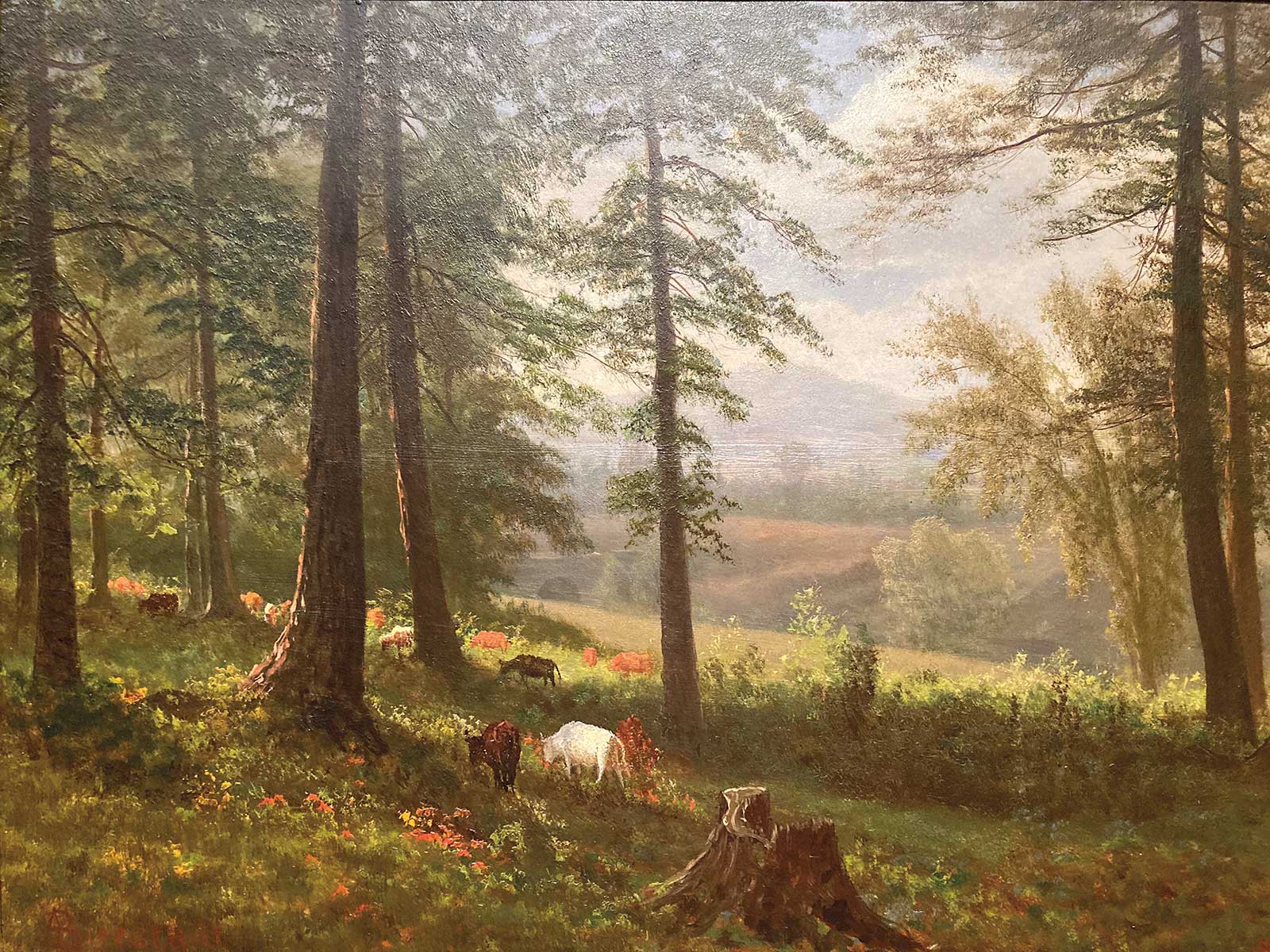 J Watson Fine Art, View to Mt. Hood, oil on canvas, 14 x 19", by Albert Bierstadt (1830-1902).
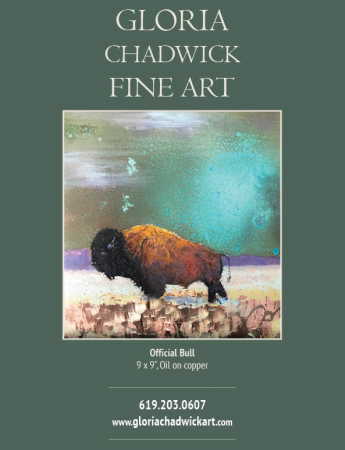
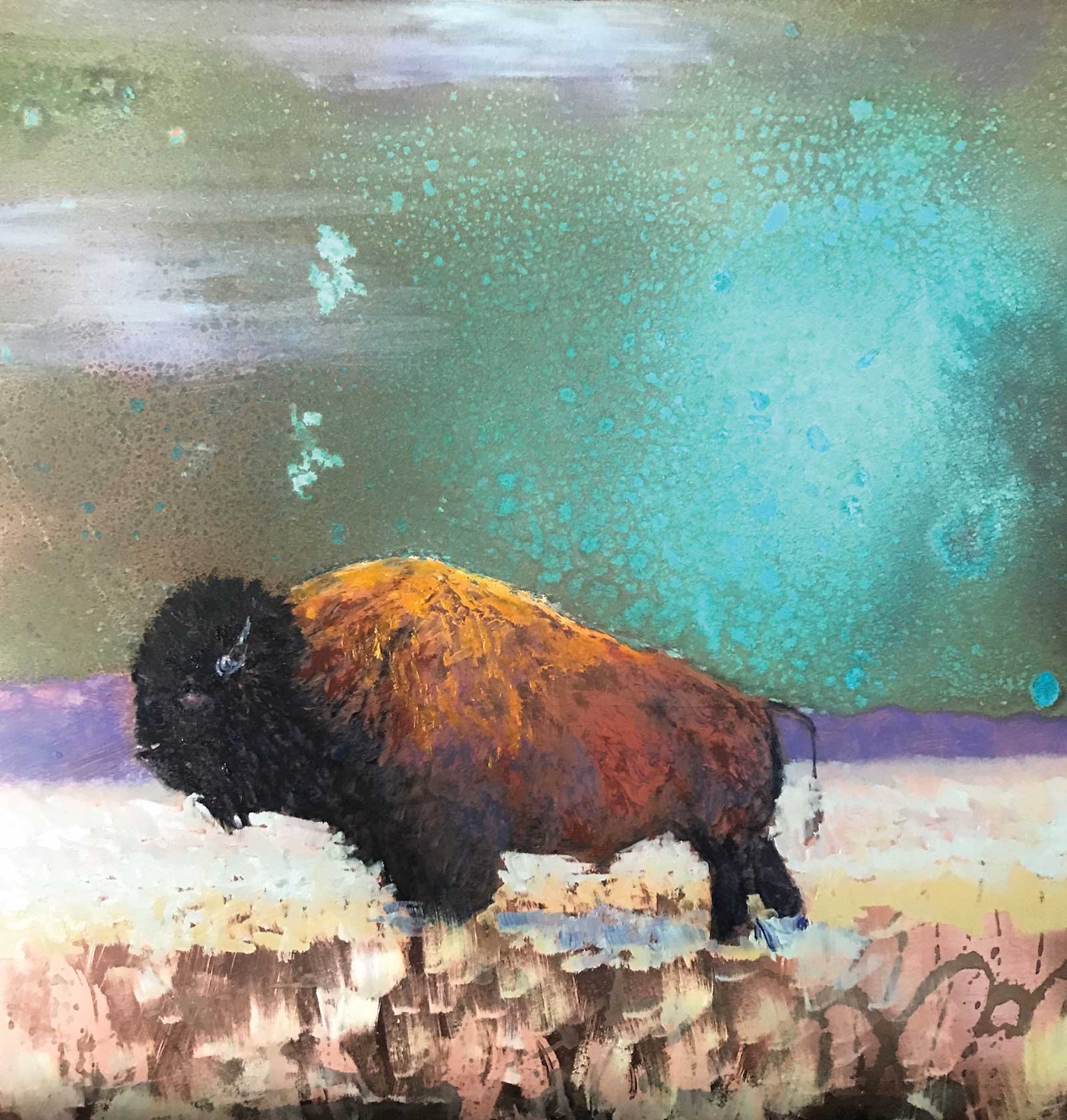 Gloria Chadwick, National Bull, oil on copper, 9 x 9"
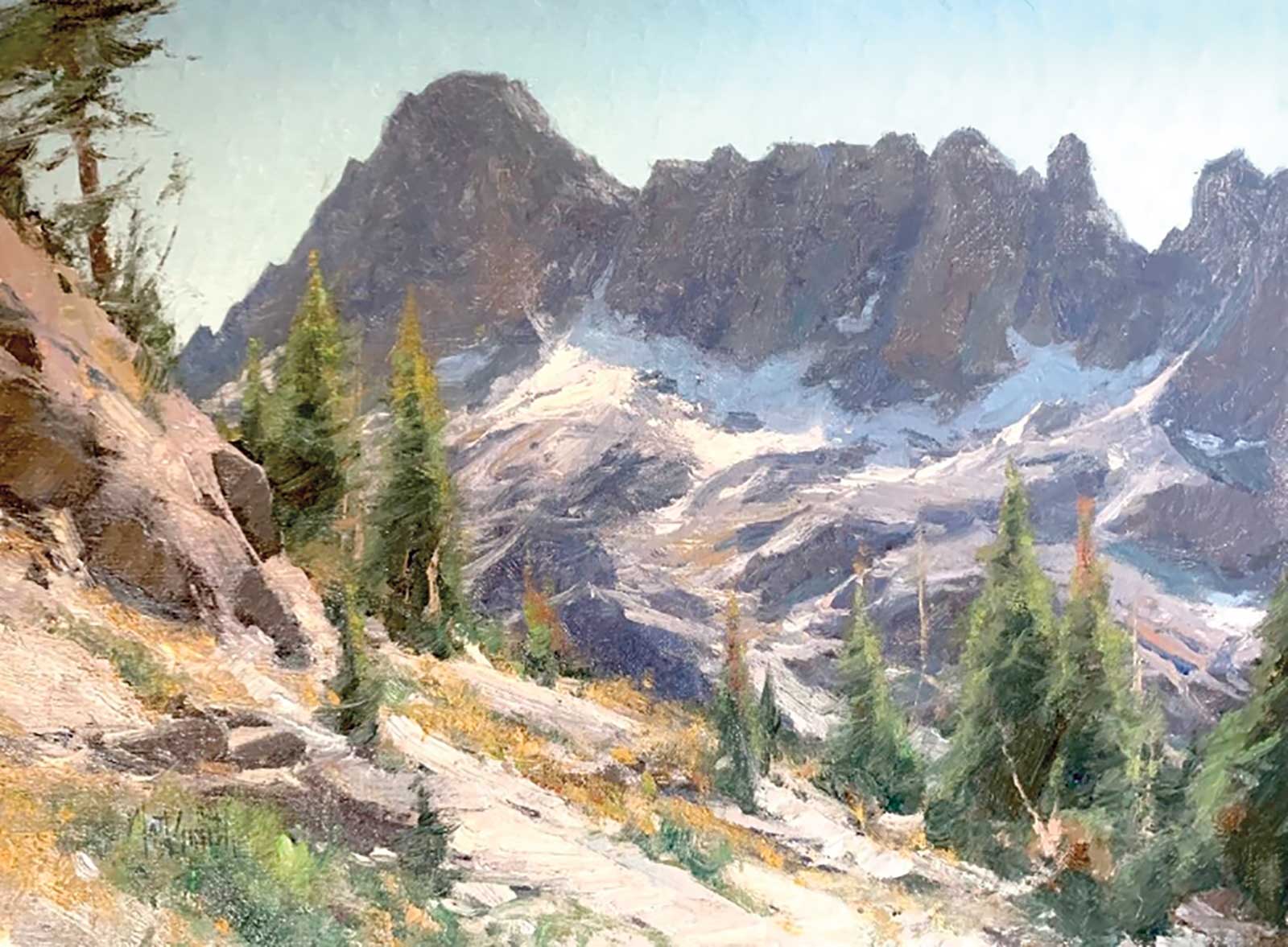 J Watson Fine Art, Timberline, oil on canvas board, 12 x 16", by Matt Smith.
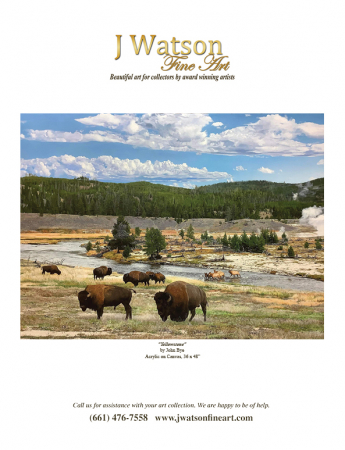
Painter Gloria Chadwick is a signature member of Artists for Conservation and Women Artists of the West. The artist is known for her distinct oil on copper paintings. “Oil painting on copper, as a substrate, has been done since the 1400s. My different approach is to let the patina inspire me as to what type of image I will paint. The turquoise and greens richly enhance the Western feeling while the natural copper color enhances the animal’s fur or feathers.”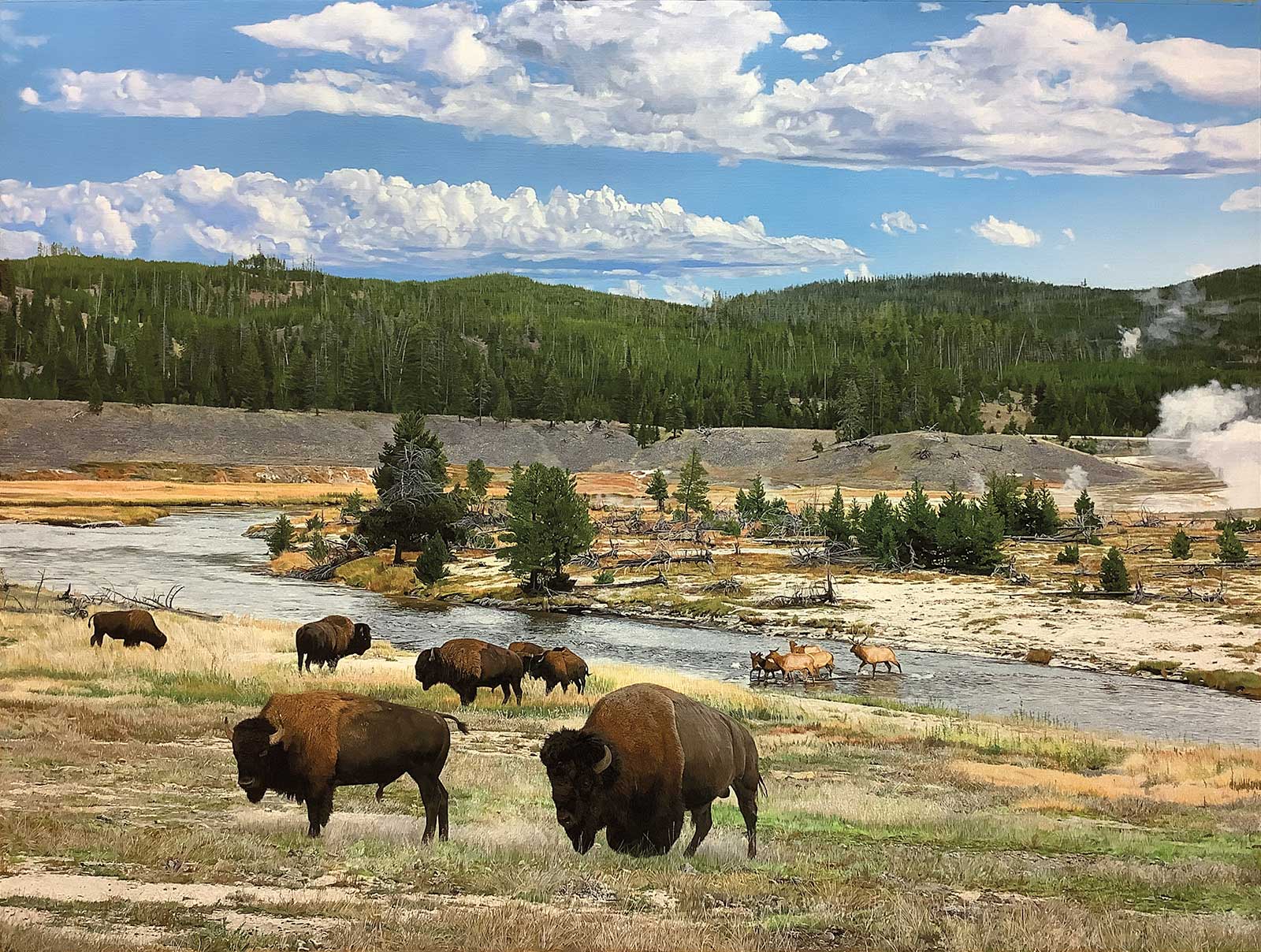 J Watson Fine Art, Yellowstone, acrylic on canvas, 36 x 48", by John Bye.
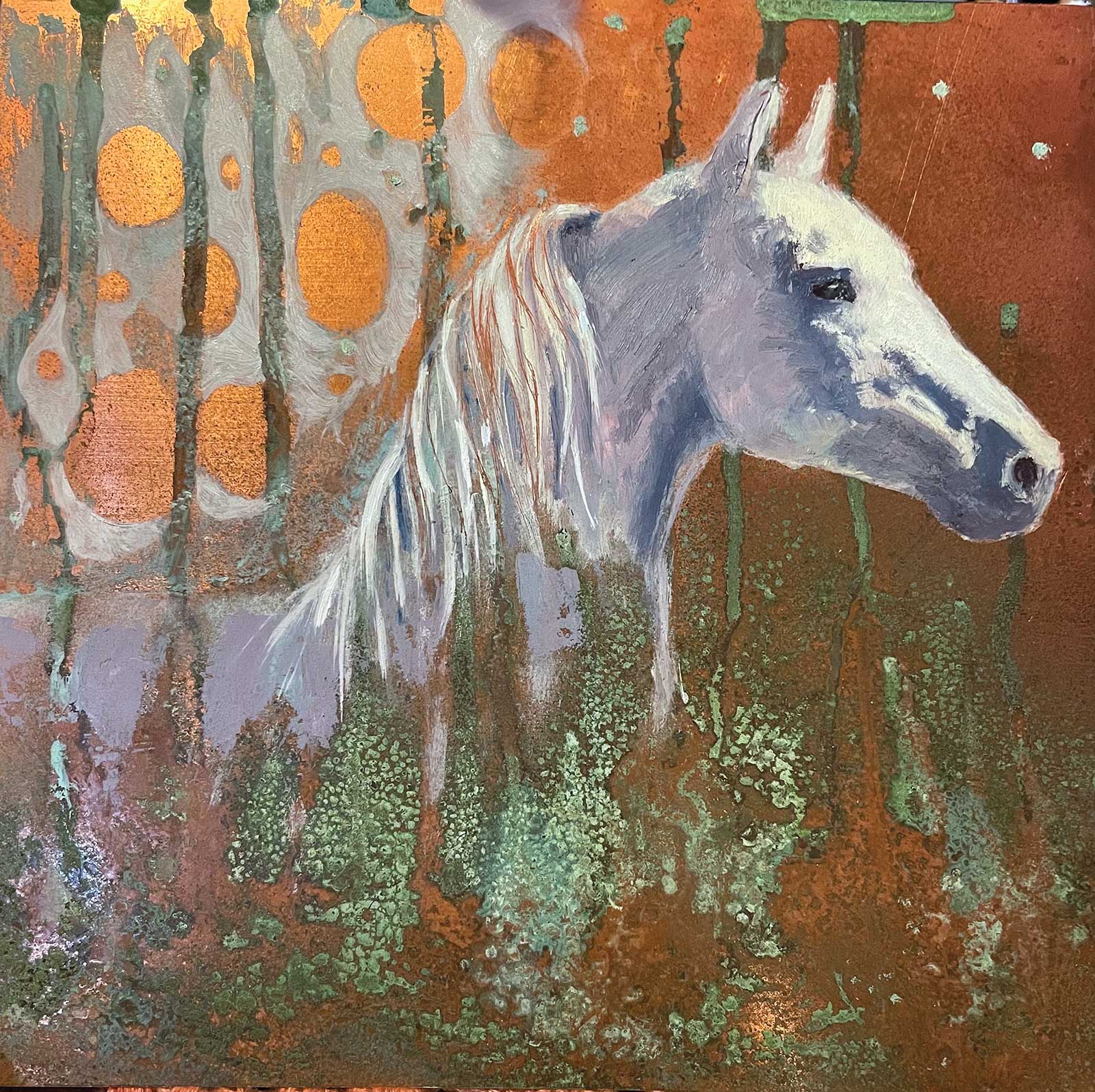 Gloria Chadwick, Copper Stopper, oil on copper, 9 x 9"
One of the greatest joys for J Watson Fine Art comes from helping collectors find the right “fit” to add to their art collections. From period paintings by Albert Bierstadt and Thomas Moran to artwork by modern masters like Matt Smith and John Bye, the gallery offers beautiful landscapes of the wilderness and Western terrain. —
Powered by Froala Editor